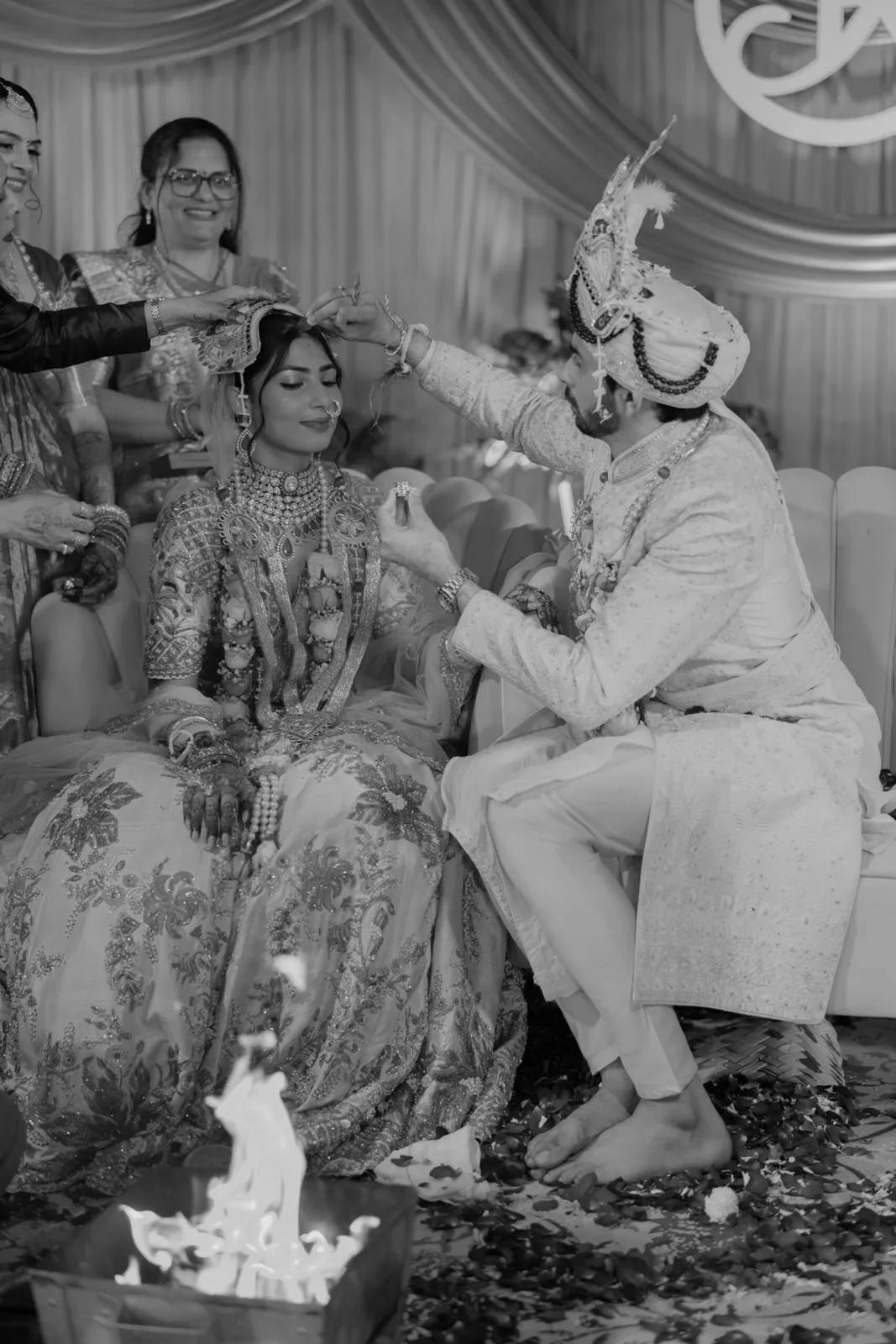
A photo brief can become confusing when it contains several mood boards, different outfit plans and messages from only one partner. Before sending everything to the photographer, turn the ideas into one shared page. The brief should explain what both people want from the session and what is flexible. It does not need professional language. A short description of the feeling, a few references and clear practical details can make planning easier than a large folder that leaves the photographer to guess which images matter most.
Planning a session? Explore our pre wedding photography service alongside this guide.
Write the purpose before the references
Start with why you want the photographs. You may want a personal record before the wedding, pictures for an invitation or simply time together in a chosen style. These purposes can overlap, but name the main one. If a photograph needs space for printed text, the photographer should know before composing it. If the collection is mainly private, the session can focus more on the relationship. Purpose gives the references a job rather than allowing every attractive image to become another requirement.
Let each person name a preference
Ask both partners to describe a photograph they would enjoy keeping and an action they would prefer to avoid. Write those answers plainly. One person might want a clear portrait while the other values a relaxed interaction. Both can fit in a small sequence. Avoid turning the conversation into a vote on which mood board wins. The brief should show common ground and useful differences, so the photographer can start comfortably and adapt without having to discover those preferences under pressure.
Reduce references to a manageable set
Choose a few images that demonstrate different useful features. One can explain the light, another the clothing and another the spacing between people. Add a sentence beneath each reference saying what you like. Do not assume the whole photograph must be recreated. The photographer can then separate the transferable idea from the setting or production that may be unavailable. A smaller annotated selection is more informative than many pictures with incompatible styles and no indication of priority.
Separate essentials from experiments
Mark which photographs you most want and which ideas are optional. Essential might mean one clear portrait together or a picture suitable for an invitation. An experiment might involve an unusual crop, dramatic expression or prop. This distinction helps when time, access or comfort changes. The photographer can protect the main collection and use remaining time for creative variations. Without priorities, an elaborate experiment can quietly consume the time intended for the photographs you came to keep.
Add the practical information in one place
Include the date, setting, access arrangement, clothing changes and intended uses. Mention any helper who will manage bags or outfits. Explain whether changing space has been confirmed rather than leaving it implied. If the setting is not yet chosen, state the decision you need help with. The photographer can respond to a clear unresolved question. Avoid several versions of the same information across separate chats; one current brief makes updates much easier to follow.
Describe boundaries without embarrassment
Tell the team about gestures, public attention or image-sharing preferences that affect the shoot. A boundary can be simple: no lifting poses, fewer close kisses, or no public posting of certain photographs. Both people should know these preferences are part of the plan. The photographer can suggest alternatives without interpreting the boundary as a lack of enthusiasm. A clear limit often makes the session more creative because it narrows the choices to actions that actually suit the couple.
An illustrative one-page brief
Consider a couple who wants invitation photographs and a private collection. Their brief names one horizontal image with clear space for text as essential. It includes two relaxed portrait references and one optional editorial idea. Both prefer ordinary interaction to dramatic gestures. One outfit change is planned, with a confirmed private space. This is a planning example rather than a client account. Each detail answers a practical question, while the brief stays short enough to read during the session.
Ask the photographer to respond with a sequence
A useful response explains how the main idea becomes a session: where to begin, which images come first and what depends on the setting. You do not need a minute-by-minute pose schedule. Ask what preparation is required and which references need adaptation. If the photographer proposes a change, discuss what purpose it preserves. That conversation turns the brief into a shared working plan instead of a document sent once and never used again.
Keep the final version easy to find
After decisions are made, update the page rather than leaving old options beside new ones. Label unresolved details and confirm them before the session. Send changes that affect timing or access directly. Keep the final reference set small enough to view easily on a phone. During the shoot, the brief should support conversation rather than replace it. If both people enjoy a natural moment that differs from the plan, there can still be room to follow it.
Start the discussion through the pre-wedding photography service page with your shared purpose and essential photograph. A clear brief makes it easier to give a useful quote and shape a session around the pair, rather than around the largest collection of references.
Discuss your photography brief
Share your intended use and priorities through our pre wedding photography service page. Fine Art Photography is based in Diu; travel assignments, coverage, editing and delivery are confirmed individually. Bring the decisions from this guide to the conversation so the proposed session can reflect what you need.
Discuss your photography brief