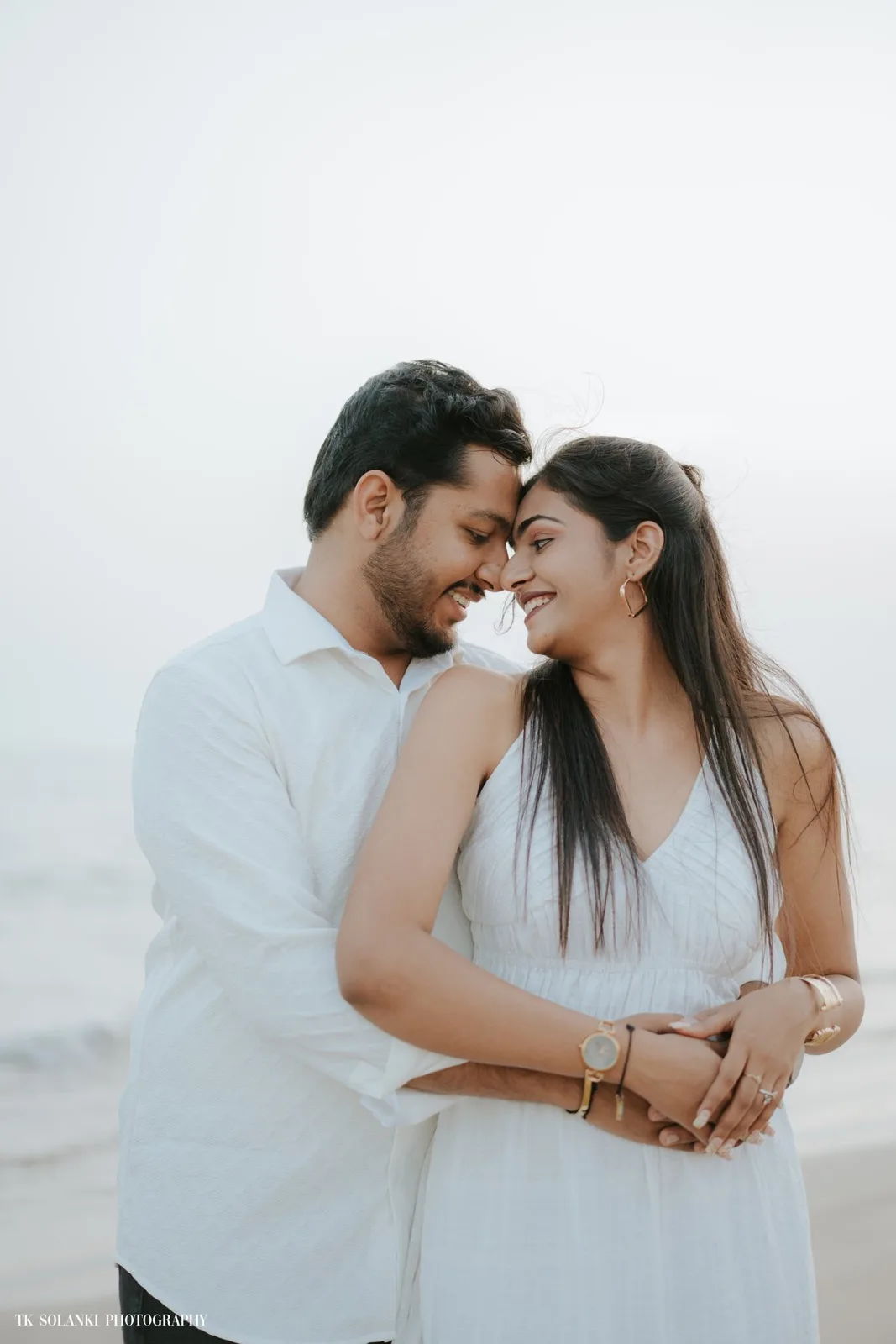
If you normally wear glasses, they may be part of how your partner and family recognise you. You do not have to remove them for a pre-wedding shoot simply because reflections can appear in lenses. A little preparation and clear direction can help the photographer manage the view of your eyes while keeping your familiar appearance. Decide whether you want glasses in all photographs, most of them or only part of the session. That preference should come from you, not from a general rule about what portraits are supposed to look like.
Planning a session? Explore our pre wedding photography service alongside this guide.
Start with your usual appearance
Choose the pair you feel comfortable wearing and check the fit before the shoot. Frames that slide down repeatedly can interrupt a close portrait. Clean the lenses gently using the appropriate method for your glasses, and bring the case if you plan to remove them. Avoid wearing an unfamiliar pair solely for the camera unless you enjoy how they look. A portrait should feel like you. The photographer can discuss reflections without treating the glasses themselves as something that needs to disappear.
Tell the photographer what matters
Explain whether seeing your eyes clearly is a main priority and whether you are comfortable changing your head angle slightly. Some people prefer to keep their glasses in every photograph; others welcome a few variations. Discuss those choices before the camera starts. Do not assume that reflections can always be removed perfectly afterwards. They may cover parts of the eye or change how the lens appears. A clear conversation gives the photographer a practical preference to work with during the session.
Understand why the angle matters
A lens can reflect a window, the sky or a light source from one position and show much less reflection from another. Small changes in the person’s position or the lighting angle can help. The photographer should guide those changes in a way that preserves a comfortable expression. You do not need to memorise a technical pose. A slight turn may be enough for one setup, while another calls for a different background or camera position. The right adjustment depends on the actual scene.
Practise natural movement rather than a fixed tilt
Constantly holding a head angle can feel stiff. During an outfit trial, notice how the frames sit when you look at your partner, walk or lean closer. Tell the photographer if the glasses move during particular actions. A simple change in the sequence may be more useful than repeating the same direction. For close interactions, take a moment to settle the frames before the photograph rather than asking someone to reach across and adjust them unexpectedly. Small pauses can protect both comfort and expression.
Be thoughtful about sunglasses
Sunglasses can create a different mood, but they also hide the eyes and change the connection in a close portrait. Decide whether that effect belongs to the concept or is merely an accessory added at the last minute. If you want both kinds of picture, make the ordinary glasses portraits first and use sunglasses for a distinct part of the session. Avoid assuming the accessory suits every background and interaction. A clear intention makes the variation feel deliberate instead of becoming another repeated pose.
Give yourself time to change comfortably
If you remove glasses for a few photographs, make sure you can move safely and follow directions comfortably. Tell the photographer if you need to remain in one position or would rather put them back on immediately afterwards. No photograph requires someone to walk without the correction they need. Choose an easy setting and keep the glasses in a safe place, with a helper if appropriate. The variation should be optional and manageable, not a test of how long you can tolerate being without them.
An illustrative portrait sequence
Imagine one partner wears glasses every day and wants them visible throughout the main collection. Begin with a relaxed walking frame and a wider portrait. For close pictures, the photographer checks the view of the eyes and makes a small positional change if needed. A separate optional frame without glasses happens only if the person wants it and can remain comfortable. This is a planning illustration, not a guarantee that every reflection will disappear. It keeps the person’s preference at the centre of the choices.
Review photographs for familiarity
When selecting images, look beyond whether a reflection exists at all. Ask whether the eyes and expression are readable and whether the person looks like themselves. A small reflection may be unobtrusive; a large bright patch over an eye may be distracting. Choose images in context rather than treating every lens highlight as a flaw. If you request editing, describe the concern on specific files. The photographer can explain what is practical without promising to reconstruct hidden facial detail.
Keep the brief short
Send a useful note: the pair you will wear, your preference about keeping them on, and any movement or visibility needs. Include an outfit-trial picture if it helps explain the frames. There is no need to apologise for wearing glasses. This is ordinary portrait information, just as useful as knowing about a hat, hairstyle or particular piece of clothing.
Bring the preference to the pre-wedding or portrait photography service page. The session can then be planned around comfortable positions and the look you actually want to remember, rather than a rule that makes someone feel less like themselves.
Discuss your photography brief
Share your intended use and priorities through our pre wedding photography service page. Fine Art Photography is based in Diu; travel assignments, coverage, editing and delivery are confirmed individually. Bring the decisions from this guide to the conversation so the proposed session can reflect what you need.
Discuss your photography brief