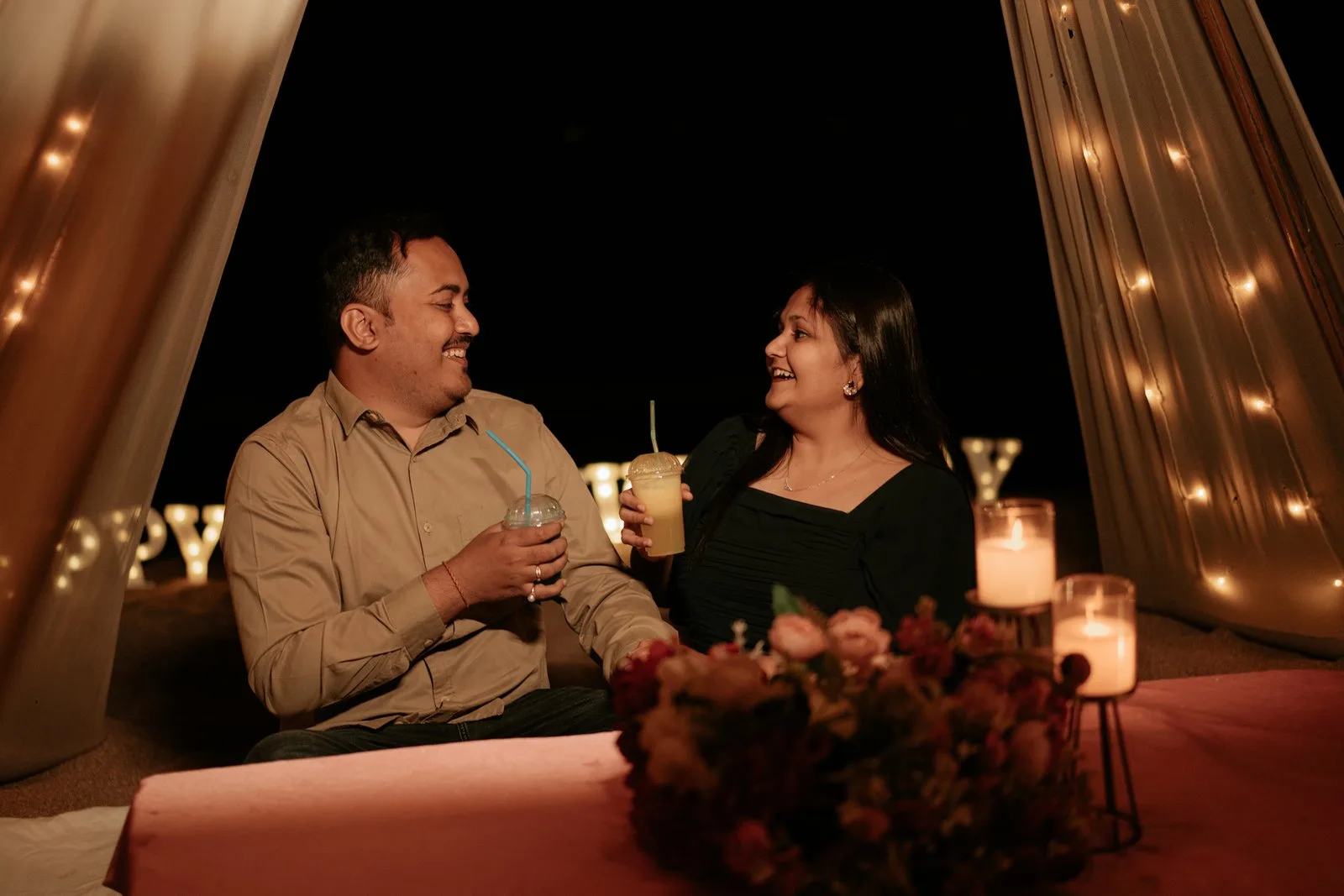
A hair and makeup trial is a useful chance to see how your chosen look behaves in photographs. It can reveal practical details that are hard to judge in a mirror: hair falling across an eye, a finish that changes under different light, or an accessory that looks more prominent in a close portrait than expected. Use the trial to communicate with your stylist and photographer. The aim is not to find a universal camera-ready face; it is to make your preferred look work comfortably for the session you are planning.
Planning a session? Explore our pre wedding photography service alongside this guide.
Begin with the look you actually want
Describe whether you prefer a familiar everyday appearance, a more defined style or a particular creative concept. Bring references that explain the relevant detail rather than asking the stylist to copy a different person’s face. Discuss the hairstyle and makeup with the clothing together. A neckline, jewellery or head covering can change what needs to remain visible. The photographer can help explain the planned framing and light, while the stylist advises on their own work. Keep those roles clear.
Make simple trial photographs
Use a phone to record the look from the front, a slight side angle and at a wider distance. Stand near a window and, if practical, in the kind of shaded outdoor light you expect to use. These pictures are a communication aid, not a prediction of the photographer’s finished files. Avoid relying on a beauty filter that changes skin or facial features. You want to see the hairstyle’s shape and how the chosen finish appears, so useful information remains visible.
Check movement and close interaction
Turn towards your partner, look down briefly and try a comfortable embrace. Notice whether hair hides an eye or jewellery catches in the style. A loose strand can look expressive, but repeated obstruction may make close portraits difficult. Ask the stylist about practical adjustments without assuming every strand must be fixed in place. If the concept includes walking or movement, the hairstyle needs to allow it. A look designed only for a still mirror view may require constant correction during the shoot.
Consider the length of the session
Tell the stylist about the expected shoot conditions and any outfit changes. Ask what ordinary maintenance they recommend and who will handle it. Do not assume the photographer provides hair or makeup support unless that is specifically agreed. Bring only the items you know how to use appropriately. If a change of look is planned, confirm the time and assistance it requires. A second hairstyle can affect the entire session sequence, not just the few minutes when the change happens.
Discuss editing expectations early
Makeup and photography editing do different jobs. The photographer cannot guarantee that every styling concern will be invisibly corrected later. Explain what you want to preserve about your appearance and ask about the agreed editing scope. Use specific trial pictures to show a concern if needed. Avoid requesting an undefined perfect face. A clearer brief might be to keep natural skin texture and the intended makeup colours. The team can then explain what its process includes and which choices belong to preparation.
Keep the trial constructive
Look for practical changes rather than scrutinising every close-up as a flaw. Ask whether the style feels comfortable, stays out of the eyes when needed and fits the concept. Make notes about what you want adjusted, then communicate them calmly with the stylist. A photograph taken at an unflattering phone angle does not prove the look is wrong. Review several views and explain the pattern you noticed. The trial should reduce uncertainty rather than create a new list of insecurities.
An illustrative trial review
Imagine a couple plans close portraits and a short walking sequence. During the trial, one person’s hair looks lovely while still but repeatedly covers an eye when they turn. A small styling adjustment keeps the same overall look while opening the face during movement. The trial photographs also confirm that the chosen jewellery remains clear beside the neckline. This is an illustrative example, not a client story or a styling guarantee. It shows how a modest practical change can support the intended photographs.
Share only the useful information
Send the photographer selected trial views with the outfit and a short note about the concept. You do not need to forward an entire conversation with the stylist. Mention any final touch-up or changing time that affects the schedule. If you are still deciding between two looks, explain the difference you are trying to resolve. The photographer can respond in relation to composition and the planned setting, while personal style remains your choice.
Stop testing once decisions are made
Repeated trials and last-minute changes can make preparation harder without improving the brief. Once you have a comfortable look and a realistic maintenance plan, record the decisions and move on. Keep the session’s purpose visible: photographs of the people and their connection. The styling supports that purpose. It should not become a requirement to hold an unfamiliar appearance perfectly throughout every frame.
Discuss the planned look through the pre-wedding photography service page alongside the outfits, setting and expected duration. Confirm any styling assistance with the provider responsible for it. The useful result is a clear preparation plan that lets you arrive feeling familiar with the look and ready to enjoy the photographs.
Discuss your photography brief
Share your intended use and priorities through our pre wedding photography service page. Fine Art Photography is based in Diu; travel assignments, coverage, editing and delivery are confirmed individually. Bring the decisions from this guide to the conversation so the proposed session can reflect what you need.
Discuss your photography brief