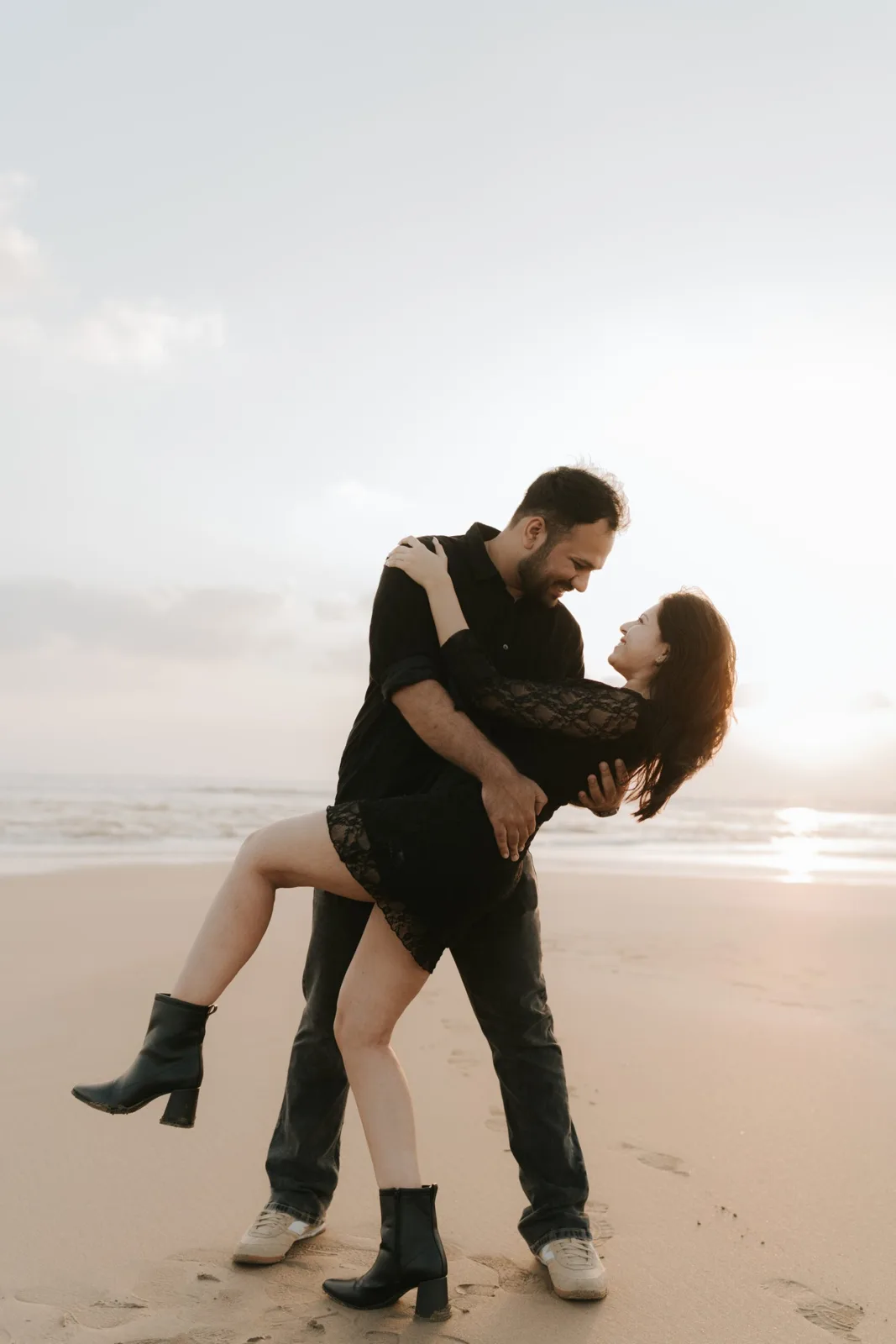
Movement can give a photograph energy when the action and composition have a clear relationship. Decide whether the person should appear sharply defined or whether some blur belongs to the idea. Then choose a safe, repeatable action that fits the setting.
Choose an action with a purpose
Walking toward someone, turning to answer or adjusting clothing can suggest a small story. Explain what the movement should communicate. Repeated jumping may be energetic, but it will feel disconnected if the intended collection is a quiet portrait sequence.
Check the surface and route
Look for uneven ground, obstacles and passing people before beginning. Keep the action inside a safe working area. The person should understand where it starts and stops so they are not trying to follow changing instructions while moving through an unfamiliar space.
Decide how motion should appear
Discuss whether the goal is a clear moving subject or deliberate blur. These are different visual choices. The photographer should test the actual speed and light rather than relying on one setting or assuming every blurred frame belongs in the final selection.
Keep the action small enough to repeat
A comfortable short walk or gentle turn allows several attempts without fatigue. Avoid making every repetition bigger in pursuit of a dramatic image. Small differences in expression and timing can add variety while the physical action remains manageable.
Watch clothing and accessories
Test how fabric, hair and jewellery behave during the movement. Adjust anything that repeatedly hides the face or causes discomfort. Some motion can support the frame, but uncontrolled accessories should not become a distraction the person must manage constantly.
Make a still alternative
Pause after the action and record a quieter portrait. It can provide a useful contrast in the collection and protect the brief if the motion concept is less successful than expected. A sequence feels more varied when energy and stillness have room beside each other.
Edit for meaningful differences
Select frames with different expression, shape or story rather than every intermediate position. Deliberate blur should serve the image. Keep the clearest version when blur merely obscures an important face or object without adding anything to the concept.
A worked planning example
ILLUSTRATIVE EXAMPLE · NOT A CLIENT CASE STUDY
A flowing outfit looks lively during a turn, but the route is uneven. Replace the large turn with a smaller movement on a stable surface. The photographer can create variation through framing and timing without making the person repeat an uncomfortable action for the effect.
Deliberate motion should be explained before selection. A subject may prefer clear faces even when they enjoy the activity itself. Discuss what the experiment changes and keep a useful still alternative. Ask the photographer to assess how the actual movement, light and framing affect the result. Do not keep increasing speed simply because a test frame feels quiet. A small action can be energetic when its timing and composition are considered. If the effect adds no meaning or hides the subject unnecessarily, choose the clearer image without treating the experiment as a failed session.
If you want a simpler plan
For one manageable movement sequence, choose a short safe action and decide how clearly the subject should appear. Ask the photographer to test it, then make a still portrait as an alternative. Stop when the action becomes tiring or clothing needs constant correction. Select the frame whose movement adds something readable to the image. A small purposeful action can provide energy without turning the session into repeated physical performance or making every delivered photograph depend on blur.
Try this before the session
Pick one short action and check the route, clothing and intended visual result. Explain whether you want a clearly defined moving subject or deliberate blur. Ask the photographer to test the action before repeating it many times. Make a quieter still frame after the movement and compare the two roles in the collection. Keep the sequence that adds energy or meaning, removing repetitive intermediate positions. This gives movement a purpose while protecting comfort and ensuring that an experiment does not replace every clear portrait the person originally wanted.
Make the brief fit the person and the final use
Explain where the photographs will appear and how the person wants to be represented. A private keepsake, a public portrait and a creative sequence can call for different choices even when the setup is similar. Confirm who approves image selection and any specific editing requests. Keep feedback attached to file identifiers so a practical change cannot be confused with another photograph. If someone feels uncomfortable with an action or the way their appearance is discussed, adjust the session respectfully. Record a straightforward alternative when the brief includes an experiment, allowing the collection to remain useful beyond that effect. During review, choose images for expression, clarity and purpose rather than assuming the most dramatic frame must become the main portrait.
Your practical checklist
- Purposeful action
- Safe route
- Intended motion look
- Comfortable repetition
- Clothing test
- Still alternative
- Selective sequence
Questions worth asking
Is a blurred movement photograph a mistake?
It can be intentional when it supports the concept. Assess whether the effect communicates something useful and whether essential details remain appropriate.
Do we need athletic actions for lively photographs?
No. A short walk, gentle turn or small interaction can add movement without physically demanding poses.
Put the guide into practice
Fine Art Photography is based opposite SBI Bank in Diu. Use the lifestyle photography service page to discuss the assignment itself, including availability, scope and delivery. Share the essential idea, intended use and practical access when you enquire. Travel assignments are confirmed individually. This guide is preparation advice; dates, coverage, editing requests and final deliverables should be agreed directly for your session.
Discuss your photography brief