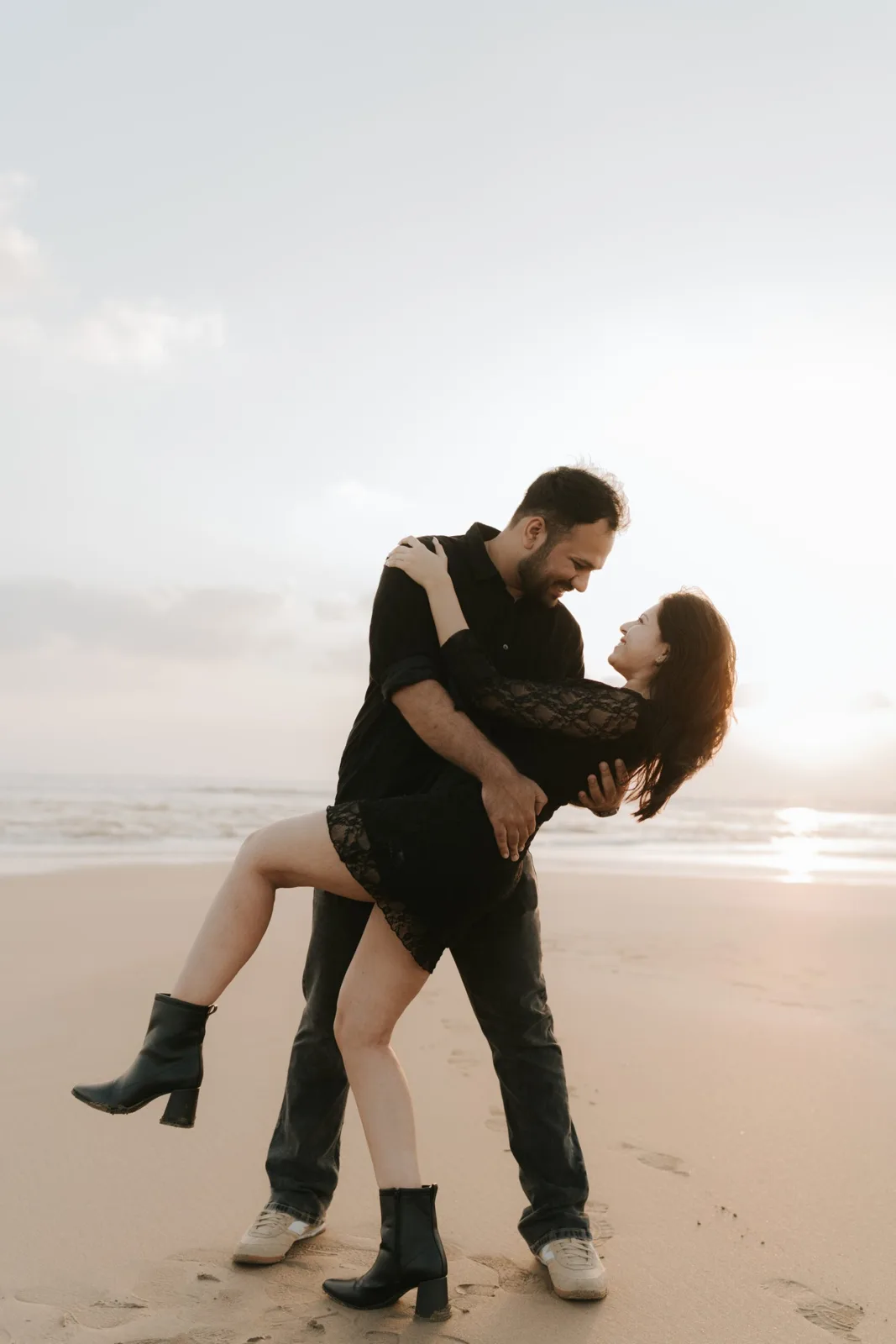
Silhouette ideas work when the viewer can read the people through their outline. A small gesture can carry the image if the background is clear and the shapes stay distinct. Plan the graphic relationship first, then treat any particular sky or effect as optional.
Choose a recognisable action
Standing together, facing each other or holding hands can provide a clear starting shape. Pick an action the couple enjoys. Complicated intertwined poses may be difficult to read once facial and clothing detail are reduced in the intended silhouette.
Simplify the background
Look for a clear area behind the outline and inspect it from the camera position. Avoid shapes cutting through heads and hands. A dramatic backdrop with visual clutter can be less effective than a plain background that lets the gesture remain clear.
Separate important outlines
Leave enough space between profiles, arms and bodies for the relationship to be understood. Make small adjustments and inspect a test frame. The couple may feel close in person while merging into an unclear shape in the image.
Use clothing deliberately
Notice whether fabric hides the limbs or changes the outline during movement. Test how the outfit behaves and keep actions comfortable. A flowing garment can add shape, but it should not cover the face or require unsafe movement to produce a dramatic effect.
Keep the ground and route safe
Choose a stable surface and a position with room for the action. Do not use unsafe edges, traffic or difficult footing to obtain the background. The photographer can adjust framing while the couple stays in a suitable working area.
Include a quieter variation
Try a still version and a small movement sequence when conditions allow. Give each a different gesture rather than repeating the same outline continuously. Record an expression-led portrait as well if the couple wants a recognisable personal image beyond the graphic concept.
Edit the series with restraint
One strong silhouette can make a statement within a larger collection. Choose the clearest shape and remove redundant versions. The concept becomes more useful when paired with photographs that show expressions and context, rather than filling every frame with the same effect.
A worked planning example
ILLUSTRATIVE EXAMPLE · NOT A CLIENT CASE STUDY
A couple's close embrace hides both profiles against a busy background. Move to a clearer angle and leave a small space between their faces. The gesture still feels connected, but the photograph becomes readable without depending on facial detail.
A silhouette can suggest connection through very small differences. The distance between profiles, the angle of a hand and the separation from the background may matter more than a large gesture. Give the photographer room to test those details without asking the couple to hold an uncomfortable position. Keep the sequence brief enough that changing conditions do not consume the session's other priorities. When selecting, ask whether the image reads without its title. A clear outline should communicate the intended relationship or action, rather than relying on a caption to explain a confusing shape.
If you want a simpler plan
A short silhouette sequence needs a readable gesture, a clear background and a safe position. Make small spacing changes after a test frame rather than introducing a more complicated pose. Keep the most useful graphic image and record a recognisable portrait separately when required. This protects both parts of the collection. The silhouette can contribute a distinct mood, while the couple still has images that show expressions and relationships without relying entirely on outline or a fleeting background condition.
Try this before the session
Test the silhouette using a comfortable action and inspect the outline in a frame. Check profiles, hands and the spaces between people before changing the background. Make small adjustments rather than increasing the pose's physical difficulty. Confirm that the surface and route remain safe, especially if visibility is changing. Keep one strong graphic image and an expression-led alternative where it suits the brief. A selective result allows the silhouette to contribute its own mood without forcing the entire collection to depend on reduced facial detail or a particular sky.
Keep the session comfortable for both people
Discuss the concept together before sending the final brief. One person may enjoy a more directed style while the other prefers quiet interaction, so name those preferences and choose a workable starting sequence. Agree who manages bags or outfit help if a companion is coming, leaving the photographer room to give clear directions. Check that the setting and actions support both people rather than only the mood board. A short pause or simpler gesture is a useful adjustment when something feels uncomfortable. Treat optional experiments as additions after the main photographs are covered. The final collection should give you images you recognise and want to use, even if the session produces a different version of the idea than the references first suggested.
Your practical checklist
- Readable action
- Clear background
- Separate profiles
- Clothing shape
- Stable ground
- Still variation
- Strong final frame
Questions worth asking
Do silhouettes need a colourful sunset?
No. A suitable bright background and a readable outline can matter more than a specific sky colour.
Should every pose be exaggerated?
No. Small, clear gestures often read better than complicated positions that merge into an unclear outline.
Put the guide into practice
Fine Art Photography is based opposite SBI Bank in Diu. Use the couple photography service page to discuss the assignment itself, including availability, scope and delivery. Share the essential idea, intended use and practical access when you enquire. Travel assignments are confirmed individually. This guide is preparation advice; dates, coverage, editing requests and final deliverables should be agreed directly for your session.
Discuss your photography brief