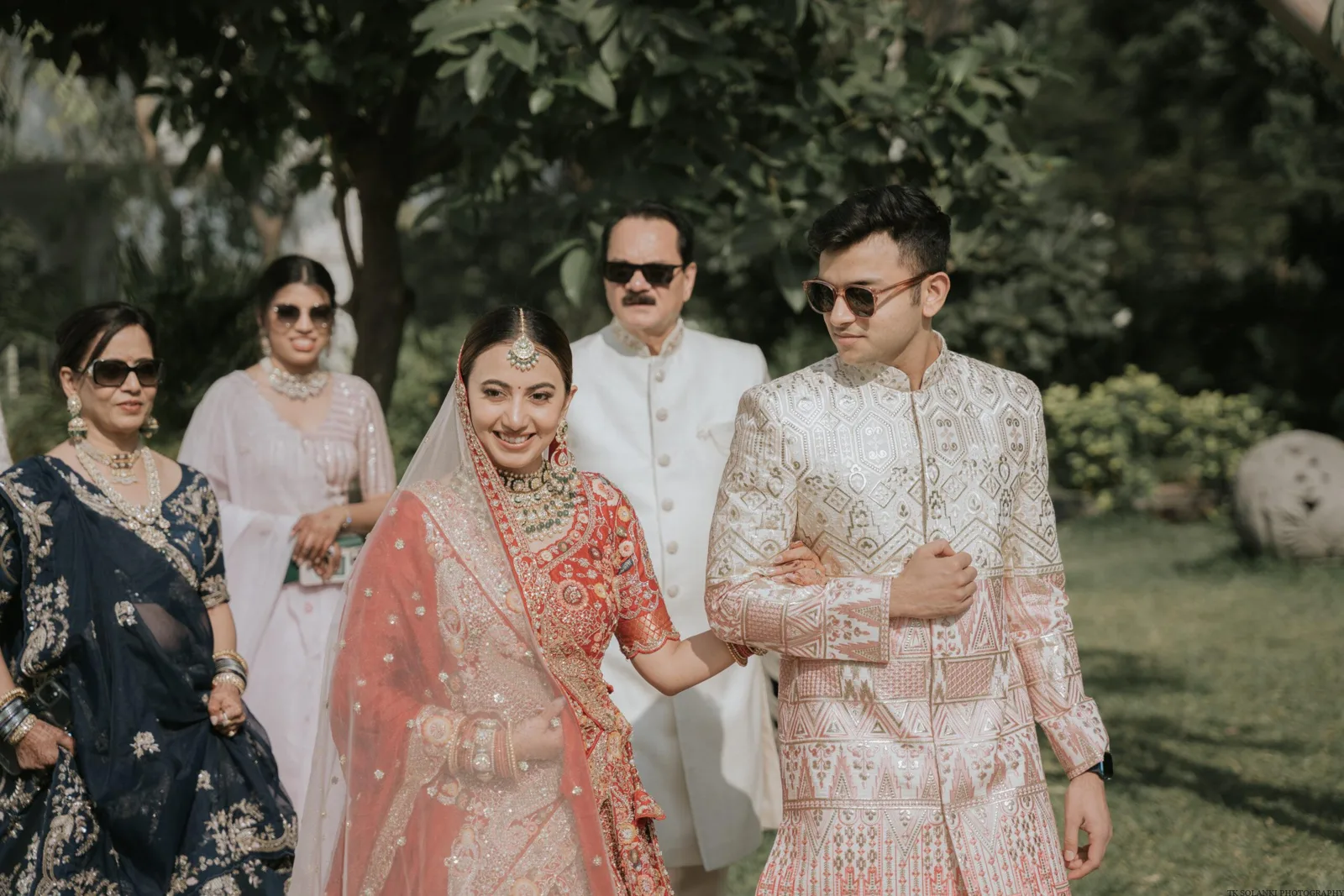
Some relatives enjoy being photographed; others step away whenever a camera appears. At a wedding, asking everyone for the same cheerful performance can make the quieter people feel even more exposed. A useful family-photo plan allows different ways of participating. You can preserve relationships through a seated portrait, a short conversation or an ordinary interaction, without treating reluctance as a problem that must be corrected. Start by asking what each person is comfortable with and explaining why you hope to include them.
Planning a session? Explore our family photography service alongside this guide.
Understand the preference privately
A relative may dislike posed photographs, feel self-conscious, or simply prefer not to be photographed. Ask gently before the day instead of discussing the issue in front of a large group. Do not promise that the camera will make them look a particular way. Explain the personal value of one photograph together and offer a small, manageable option. If they decline, respect that answer. A meaningful family collection should not depend on pressuring someone into an experience they have clearly refused.
Tell the photographer what helps
Describe practical preferences without labelling someone difficult. “They prefer a short seated portrait” gives the photographer a useful starting point. “They hate photographs” does not explain what would make the session easier. Mention whether they want to avoid a crowd watching or would feel better standing beside a familiar person. Share names so the team can identify the right relative respectfully. Keep personal explanations private; the photographer usually needs the accommodation rather than a detailed account of why it is wanted.
Make the group small at first
A large group can attract instructions from several relatives and spectators. Start with the people whose connection matters most. A couple and a parent, or two siblings sitting together, may feel easier than joining a wide row while everyone watches. Keep the setup short and let the photographer give the directions. Once the essential picture is made, ask whether the person wants to join a larger group. A small success can make the next choice more comfortable, but it should remain a choice.
Offer an ordinary action
People who dislike a formal pose may settle while talking, looking at a keepsake or helping with clothing. Choose an action that belongs naturally to the relationship. Do not manufacture a sentimental scene or ask someone to repeat an emotional gesture several times. Tell the photographer that you value an image of the interaction even if nobody looks directly at the lens. These photographs can complement one clear portrait and show a quieter person as others know them in everyday life.
Avoid commentary about appearance
Family members sometimes try to help by commenting on weight, posture, age or how someone usually looks in photographs. That can make the moment more uncomfortable. Ask helpers to gather people and leave appearance directions to the photographer. A calm request to turn slightly or move closer is different from public criticism. Let people adjust clothing or take a moment without attracting attention. The tone around the camera affects expressions just as much as the pose being requested.
Choose a comfortable setting
A place to sit, a little shade and an uncomplicated route can make participation easier. If someone needs a break from the celebration, use a quieter permitted corner rather than bringing a large group into their resting space. Explain the timing beforehand so the portrait does not feel like an ambush. For elderly relatives or anyone who prefers seated photographs, arrange the group around them. You do not need matching standing poses for every person to produce a coherent family picture.
An illustrative family arrangement
Suppose a parent wants one portrait with the couple but dislikes being the centre of attention. Plan it before the larger family groups gather. Choose a chair in a suitable setting and bring only the couple initially. Make a short, clear portrait, then allow a conversation or a hand held naturally. Afterwards, ask whether the parent wants a picture with siblings. This is a planning example rather than a client account. Its purpose is to show how privacy and a small first group can reduce pressure.
Keep candid coverage respectful
A preference against posing does not automatically mean permission to photograph someone secretly. Clarify whether natural coverage is welcome and whether public sharing is acceptable. Guests can have different boundaries for a private gallery and social media. Tell the team about specific requests without promising that every background appearance can be avoided in a busy event. Discuss a practical approach. Respectful photography takes the person’s stated wishes seriously rather than interpreting a candid style as permission to ignore them.
Choose the final photographs together where appropriate
If a relative is particularly concerned about public use, ask before selecting their portrait for a public post. They may be happy to keep the image in the family album while preferring a different photograph online. Explain that an image does not need to become public to have value. During selection, favour photographs that feel familiar and comfortable. The most expressive frame is not always the one someone wants circulated beyond the family.
Use the family photography service page to discuss group needs, and the wedding service page when those portraits are part of wedding coverage. Send a short list of important relationships and practical preferences. A gentle plan helps the photographs belong to the people in them, including those who would never volunteer to stand at the front of a camera.
Discuss your photography brief
Share your intended use and priorities through our family photography service page. Fine Art Photography is based in Diu; travel assignments, coverage, editing and delivery are confirmed individually. Bring the decisions from this guide to the conversation so the proposed session can reflect what you need.
Discuss your photography brief