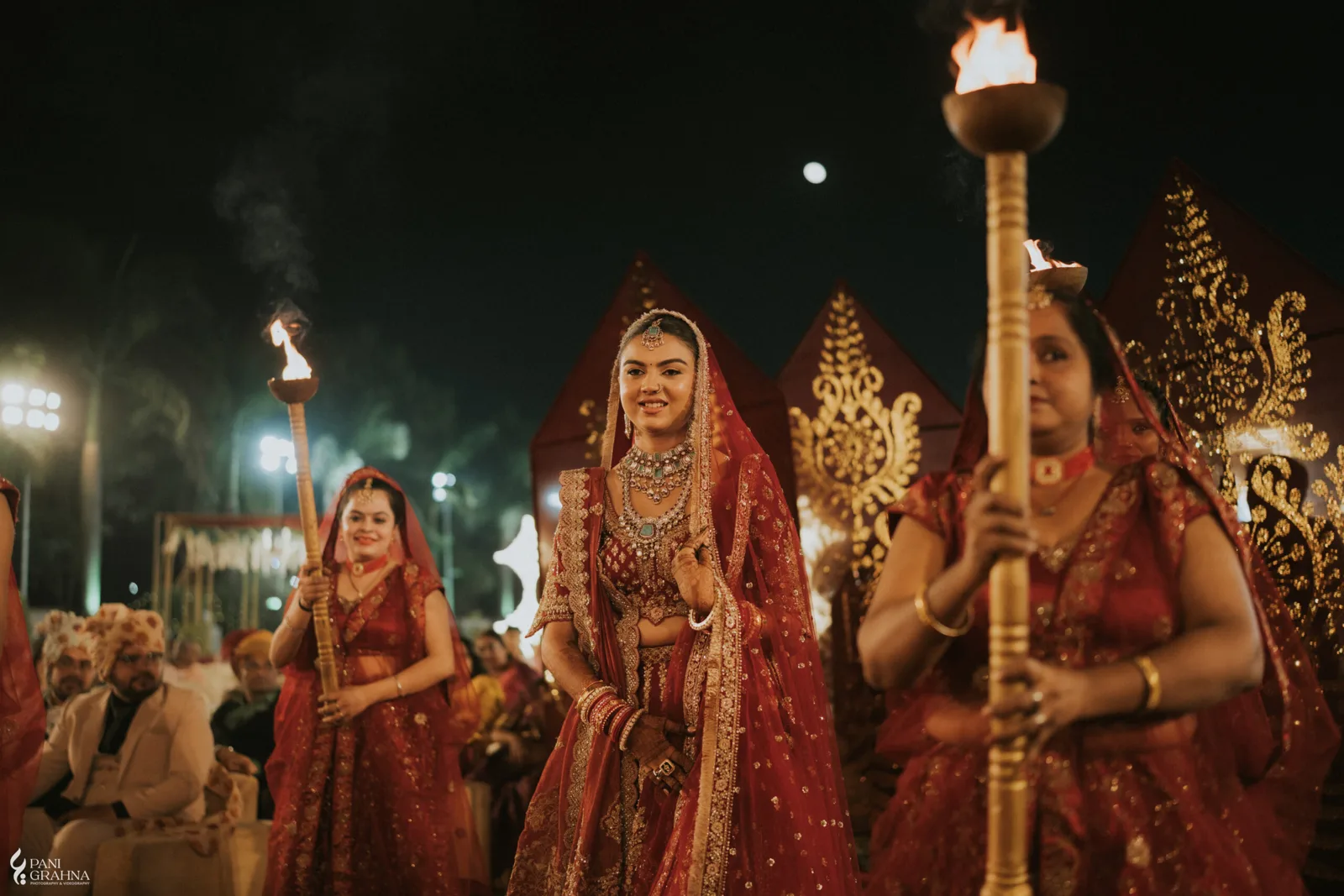
Reception spaces often combine decorative lights, stage lighting and darker seating areas. Tell the photographer what will change during the evening. A useful plan keeps faces readable while still allowing the room to feel like the celebration you designed.
Share the lighting schedule
Tell the team about stage changes, entrance effects and any planned blackout. A photograph of the venue lighting can help begin the discussion, but the actual setup should be checked onsite. Ask who controls the lights so requests can be handled without repeated messages through the couple.
Separate atmosphere from portraits
A wider view can record the room's colours and mood, while a closer portrait may need a different light arrangement. Agree both purposes. Trying to make every photograph equally bright can erase the evening atmosphere or create unflattering portraits under an unsuitable light.
Keep a portrait position ready
Choose an accessible place for essential groups with sufficient room in front of the camera. Ask whether extra photographic lighting is permitted there. Keep cables and stands out of guest routes, and tell venue staff when the position needs to remain available.
Coordinate entrances and speeches
Let the photographer know where people enter, pause and speak. Ask hosts to avoid unexpected changes that leave a speaker in an unlit corner. The team should be able to anticipate the action rather than discovering the position only after an announcement begins.
Watch the background in close views
A bright display, exit sign or moving screen can pull attention away from a face. Check the portrait angle before groups gather. A small change in position may create a calmer frame without altering the decoration or asking guests to move across the entire room.
Plan dance-floor coverage respectfully
Discuss the type of images you want and whether guests have sharing restrictions. The team needs a safe way to move near the action. Avoid directing guests into artificial dancing solely for photographs if the brief is to document how the evening actually felt.
Review the complete evening sequence
When choosing favourites, keep a balance of the room, entrances, close expressions and family groups. Differences in atmosphere can belong to the story. If a technical concern appears consistently, raise it with the photographer instead of comparing every image to a daylight portrait.
A worked planning example
ILLUSTRATIVE EXAMPLE · NOT A CLIENT CASE STUDY
A coloured stage wash changes just as family portraits begin. Ask the lighting coordinator for a steady, agreed portrait setting during that window, then restore the event lighting afterwards. This is easier than expecting one camera setup to produce identical skin tones through every lighting change.
Give the photography team information about screens and entertainment as well as lamps. A presentation, moving background or unexpected stage position can change what appears behind the speaker. Ask for the practical cue before an entrance begins and confirm where the person will pause. Keep essential portraits in a predictable window when possible. If a lighting condition changes, let the photographer assess the new position rather than insisting that every earlier instruction remain fixed. The collection can contain varied atmosphere while still prioritising readable faces and purposeful coverage of the reception's actual events.
If you want a simpler plan
For a simpler reception plan, confirm the entrance, speeches and essential portrait window with the lighting contact. Choose one useful portrait position and keep its access clear. Let wider atmosphere images show other parts of the room without requiring a new setup for every background. If the event changes, communicate the actual position or timing promptly. A practical sequence with readable faces and relevant reactions is more valuable than attempting several decorative locations while missing the people who matter.
Try this before the session
Walk through the reception sequence with the person controlling stage and room lighting. Note the entrance, speeches, family portraits and any major changes in the setup. Check where the speaker and couple will actually stand. Choose a steady arrangement for the important portrait window and a safe route for the team. Make sure the plan records who can authorise a lighting adjustment. A single practical conversation can prevent the photographer from chasing information through several relatives while an entrance or speech is already happening.
Keep the photography plan beside the event plan
Share decisions with the people who coordinate the day, including the photographer and a family contact. Make clear which parts of the event are fixed and which photography ideas remain flexible. If another supplier or relative changes a practical detail, update the agreed version rather than sending several conflicting messages. The couple should not become the only route for ordinary information while they are participating in the celebration. Ask the team to confirm the implications of a change instead of assuming the original coverage can remain identical. Keep the plan readable enough to use onsite: names, useful cues and decisions matter more than decorative formatting. This organisation supports photographs of real people and interactions while allowing the event to keep its own rhythm.
Your practical checklist
- Lighting contact
- Entrance position
- Speech position
- Portrait light
- Guest route
- Sharing boundaries
- Atmosphere frames
Questions worth asking
Will all reception photographs have the same colour?
Lighting changes can affect appearance. Agree an approach that keeps people natural while retaining the feel of different parts of the evening.
Do we need extra lighting?
That depends on the venue and brief. Let the photographer assess the space and confirm what is allowed before equipment is planned.
Put the guide into practice
Fine Art Photography is based opposite SBI Bank in Diu. Use the event photography service page to discuss the assignment itself, including availability, scope and delivery. Share the essential idea, intended use and practical access when you enquire. Travel assignments are confirmed individually. This guide is preparation advice; dates, coverage, editing requests and final deliverables should be agreed directly for your session.
Discuss your photography brief