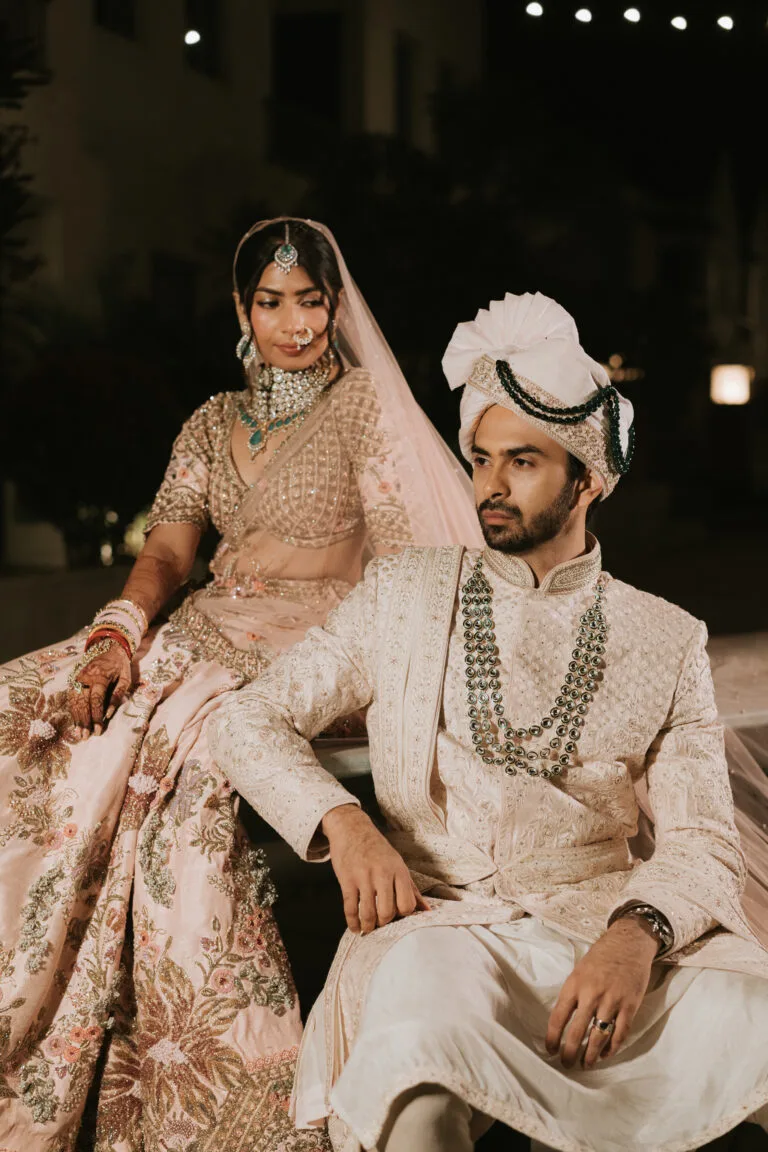
An album becomes more engaging when its images work together. Your favourite portrait still matters, but the surrounding photographs explain who was there and how the day felt. Select a sequence before worrying about elaborate page effects.
Begin with a broad first selection
Choose photographs for memory and significance before limiting the count. Include people, places, rituals and quiet exchanges. Mark alternatives from the same moment together so you can compare them later rather than treating every similar image as a separate essential choice.
Build chapters from the day
Arrange preparation, ceremony, portraits and celebration in a readable order. The exact structure can be flexible, especially for multi-event weddings. Look for natural transitions: an arrival, a changed outfit or a wider scene can introduce a new part of the story.
Use close and wide views together
A wide photograph explains the setting, while an expression or hand detail brings the reader closer. Pair images that add different information. Several tight portraits across consecutive pages can make the album feel repetitive even when each photograph is individually appealing.
Give important people visible space
Check that parents, siblings and other meaningful relationships appear clearly. Their images do not all need to be formal groups. A small interaction may carry more feeling, but make sure the person is recognisable in the final print size.
Reduce near-duplicate favourites
Compare expression, framing and the role each image plays. Keep the version that works best in the sequence. Save the alternatives in the digital gallery; leaving a photograph out of the album does not mean it loses its value as a private memory.
Review layouts at realistic size
Ask to see the proposed spreads and notice small faces, awkward crops and crowded pages. A layout that looks striking on a large screen may hide important detail in print. Check names or captions carefully if they are included.
Approve the final proof carefully
Review the sequence, crops, image choices and any text before approving production. Keep a record of requested changes so nothing is lost between messages. Confirm the printer or photographer's approval process; do not assume a change can be made after the album has entered production.
A worked planning example
ILLUSTRATIVE EXAMPLE · NOT A CLIENT CASE STUDY
A couple chooses twelve nearly identical sunset portraits and leaves out the ceremony reactions. Keep the strongest few portraits, then restore the images that show the family and transition into the celebration. The album can still feel beautiful while telling more of the actual day.
An album can hold different kinds of significance. A technically tidy frame may explain an event, while a quieter candid image may preserve a relationship. Keep both roles in mind when choosing. Check whether each spread has a point of attention and whether smaller images remain readable. Text, if included, should be accurate and useful rather than explaining every emotion for the viewer. Ask other people for missing relationships or events, but keep final selection decisions manageable. Too many uncoordinated revisions can produce a crowded album whose image choices no longer follow a clear sequence.
If you want a simpler plan
For a shorter album selection, choose the strongest image from each meaningful stage and then add the relationships that would otherwise be absent. Remove repeated portraits before removing context. Give a strong photograph room rather than squeezing every favourite onto the spread. Keep the complete gallery separately so the album does not have to preserve every variation. Review the resulting sequence for clarity, readable faces and a natural ending, then check the actual layout before approving the final print.
Try this before the session
Choose a small set of favourites from one part of the wedding and arrange them as a sequence. Include the setting, a significant action, an expression and a quieter ending. Compare that sequence with a selection of only dramatic portraits. Notice which version explains more of what happened and which people appear clearly. Use the same test across the rest of the album. Keep duplicate favourites in the digital collection while giving the printed sequence room to move between scale, expression and relationship. Review actual layout crops before making the final approval.
Keep the photography plan beside the event plan
Share decisions with the people who coordinate the day, including the photographer and a family contact. Make clear which parts of the event are fixed and which photography ideas remain flexible. If another supplier or relative changes a practical detail, update the agreed version rather than sending several conflicting messages. The couple should not become the only route for ordinary information while they are participating in the celebration. Ask the team to confirm the implications of a change instead of assuming the original coverage can remain identical. Keep the plan readable enough to use onsite: names, useful cues and decisions matter more than decorative formatting. This organisation supports photographs of real people and interactions while allowing the event to keep its own rhythm.
Your practical checklist
- Broad favourites
- Event chapters
- Close and wide balance
- Important people
- Duplicate reduction
- Crop review
- Final approval
Questions worth asking
Should every delivered image go in the album?
An album benefits from selection. Keep the full gallery separately and choose images that build a readable sequence.
Is chronological order compulsory?
No. It is a useful starting point, but a thematic arrangement can work if transitions remain clear and the people involved prefer it.
Put the guide into practice
Fine Art Photography is based opposite SBI Bank in Diu. Use the wedding photography service page to discuss the assignment itself, including availability, scope and delivery. Share the essential idea, intended use and practical access when you enquire. Travel assignments are confirmed individually. This guide is preparation advice; dates, coverage, editing requests and final deliverables should be agreed directly for your session.
Discuss your photography brief