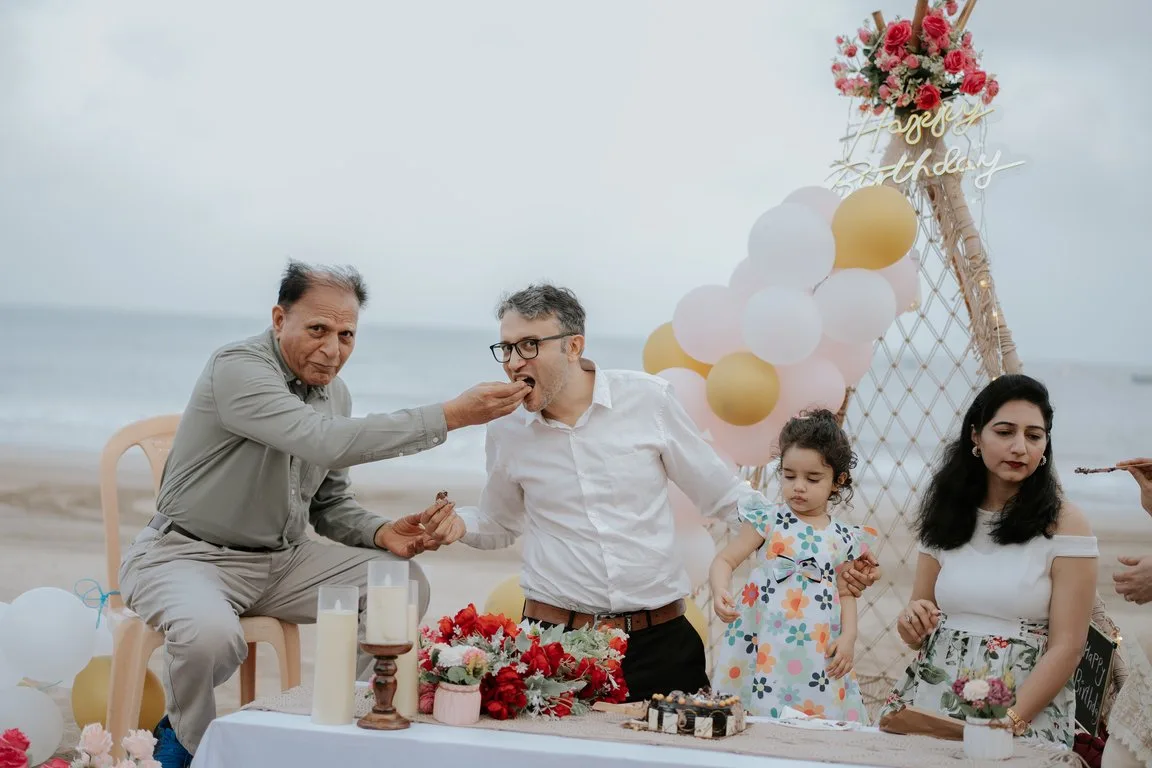
Family portraits become stressful when nobody knows who is needed or where to stand. A short plan solves most of that confusion. Think about access, relationships and departures before choosing a background or collecting pose references.
Choose an accessible meeting point
Look for a nearby place with level access, a manageable background and enough space for the group. Avoid sending elderly relatives across a venue unnecessarily. The photographer can work around a practical seating arrangement more easily than around exhausted or missing participants.
Write groups as names
“Bride's family” can mean several different combinations. List the people in each essential arrangement and nominate somebody who knows them. Share sensitive group preferences privately. A coordinator should help people gather, while the photographer concentrates on spacing, expression and the frame.
Start with people who need priority
Relatives with limited mobility, young children and people leaving early should be considered first. Their inclusion should not rely on a late-night session. Ask when they are comfortable being photographed and build the order around that information rather than family hierarchy alone.
Keep the central arrangement stable
When sensible, retain the couple or seated elders and change the surrounding group. This reduces repeated movement and helps clothing remain settled. Stop for a quick check when somebody joins: a person partially hidden behind another shoulder may disappear in a printed group photograph.
Allow expression to settle
Take a breath before the photograph rather than shouting several competing instructions. One person should give direction. Ask everyone to look toward the photographer together, then allow a second frame with a looser expression or interaction if the group is comfortable.
Plan smaller relationship photographs
A large group records attendance, but a smaller photograph with siblings or parents can show a different relationship. Choose a few that matter. Do not add every possible combination during the session unless there is genuinely enough time and the people want them.
Finish with a clear release
Tell each group when their photographs are complete so they can return to the celebration. Recalling people repeatedly creates confusion and resentment. If someone was missed, ask the coordinator for a quiet later opportunity instead of stopping every activity to restart the formal sequence.
A worked planning example
ILLUSTRATIVE EXAMPLE · NOT A CLIENT CASE STUDY
A grandparent cannot stand comfortably for long. Begin with their seated group and bring people to them, then move on to other arrangements. Making the whole family wait for a complicated backdrop would put the photograph ahead of the person's comfort.
A group photograph is not only a problem of assembling everyone. People should be visible, comfortable and represented as they wish. Ask before moving a relative's chair or placing them in a position that is difficult to hold. Young children may need a parent nearby rather than another instruction from across the group. If one formal arrangement is not working, simplify it and record a smaller image later. The photographer can advise on spacing and framing, while the coordinator manages names. Keeping those roles clear prevents several people from giving conflicting directions at the same time.
If you want a simpler plan
If the group window is short, keep priority elders and immediate family first, using one accessible position. Name a coordinator and gather the next group while the current one is being photographed. Remove redundant combinations before the event rather than debating them during the session. Smaller relationship photographs can happen later when the people are together naturally. The essential group list should remain readable, with enough time for faces and clothing to settle instead of treating assembly as the only task.
Try this before the session
Write the essential family groups as individual names, then arrange them by practical needs. Identify who needs a seat, who may leave early and which children should not have to wait through every other arrangement. Choose the meeting point and ask one person to gather each side of the family. Walk the route from the ceremony space if possible. If it is difficult for an elder, change the portrait position before the day. Share the list with the photographer for spacing and timing advice, keeping personal relationship information out of public group messages when appropriate.
Keep the photography plan beside the event plan
Share decisions with the people who coordinate the day, including the photographer and a family contact. Make clear which parts of the event are fixed and which photography ideas remain flexible. If another supplier or relative changes a practical detail, update the agreed version rather than sending several conflicting messages. The couple should not become the only route for ordinary information while they are participating in the celebration. Ask the team to confirm the implications of a change instead of assuming the original coverage can remain identical. Keep the plan readable enough to use onsite: names, useful cues and decisions matter more than decorative formatting. This organisation supports photographs of real people and interactions while allowing the event to keep its own rhythm.
Your practical checklist
- Accessible backdrop
- Named groups
- Early departures
- Mobility needs
- One coordinator
- Smaller relationships
- Clear finishing cue
Questions worth asking
Can the photographer arrange all the family groups alone?
They can guide the photographs, but a family coordinator who recognises people makes gathering groups much easier.
What if somebody is missing?
Complete the people who are present and agree a later opportunity. Avoid keeping everyone waiting indefinitely for one additional arrangement.
Put the guide into practice
Fine Art Photography is based opposite SBI Bank in Diu. Use the family photography service page to discuss the assignment itself, including availability, scope and delivery. Share the essential idea, intended use and practical access when you enquire. Travel assignments are confirmed individually. This guide is preparation advice; dates, coverage, editing requests and final deliverables should be agreed directly for your session.
Discuss your photography brief