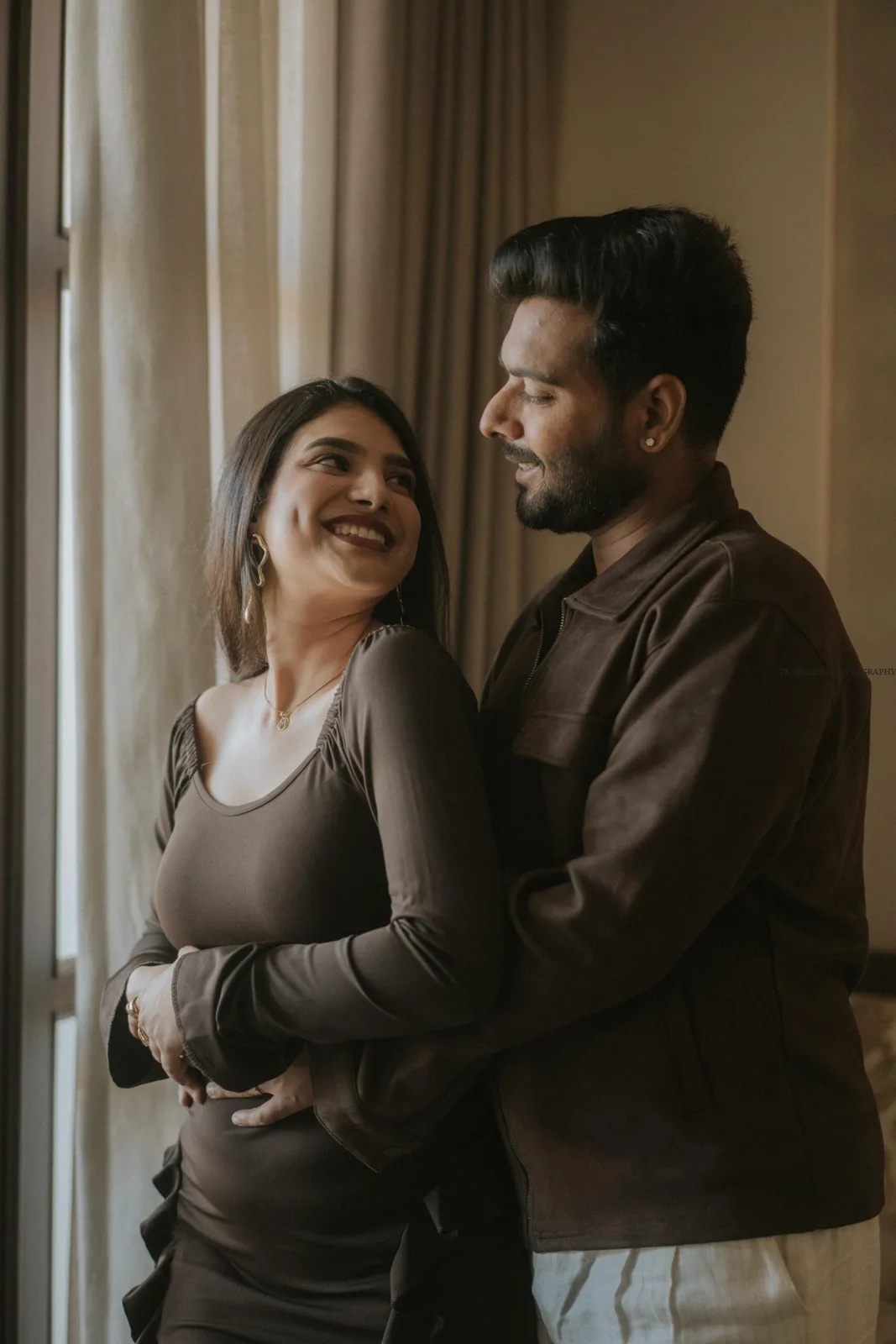
Editing should be discussed in examples and practical terms. “Make it premium” does not tell the photographer how you want to look. Explain preferences about colour, visible skin detail and temporary distractions, then ask what is included in the agreed delivery.
Use examples with explanations
Show an image and identify the colour, contrast or skin treatment you like. Do not assume a particular look can be separated from the light and styling that produced it. The photographer can explain which parts are capture decisions and which are editing choices.
Discuss how much skin detail remains
Explain whether you prefer a natural treatment or a more polished appearance demonstrated in actual work. Avoid requesting an undefined level of perfection. Keep the conversation respectful of the person being photographed and allow their own preference to guide how they are represented.
Separate temporary distractions from identity
A stray thread or temporary mark is different from changing facial shape or body proportions. Be specific about what you want assessed. Ask what is feasible and included, rather than assuming every alteration is part of ordinary colour and tone work.
Expect a coherent collection
Images made in different conditions do not need to look identical, but they should feel considered together. Review full galleries to understand the photographer's approach. Ask about consistency across the assignment without demanding that indoor evening light look exactly like an outdoor daylight scene.
Clarify selection and revisions
Ask how favourites are selected and when particular editing requests should be sent. Use image identifiers so instructions cannot be confused. Confirm the agreed revision process and scope in writing instead of assuming unlimited changes after final delivery.
Keep original intent in view
Editing should serve the expression and story captured during the session. A distracting effect or overly strong treatment can compete with the face. Compare the result with the brief and actual examples, not with an unrelated heavily altered image saved later.
Review before public use or print
Check the versions you intend to share or produce at a useful viewing size. If something feels unlike you, explain the specific concern promptly. Keep files organised so an older draft is not accidentally chosen after a revised version has been agreed.
A worked planning example
ILLUSTRATIVE EXAMPLE · NOT A CLIENT CASE STUDY
A person wants a temporary blemish softened but does not want their face reshaped. Say both things clearly before final editing. A specific request lets the photographer assess the work without treating a broad instruction such as “make me perfect” as permission to change identity or appearance.
The person in the photograph should have a voice in appearance changes. If relatives or colleagues request additional alterations, check whether those requests match the subject's preference. Keep feedback specific and tied to the agreed scope. It is also useful to explain where the image will appear, since a small digital portrait and a large print may be reviewed differently. Organise final files so revised versions are not mixed with earlier drafts. The goal is a consistent, usable collection that represents the person as intended, without a vague promise that editing can solve every capture or styling problem.
If you want a simpler plan
A concise editing brief identifies the preferred colour treatment, the amount of skin detail you want and any specific changes to assess. State alterations you do not want as clearly as requests you do. Use file identifiers and confirm the revision process. Review the final versions before printing or sharing. This gives the photographer a practical conversation about representation and scope, avoiding a broad instruction that might be interpreted as permission to make changes the subject never intended.
Try this before the session
Choose editing references and label what you like about each. Separate colour and tone preferences from specific retouching requests. Identify any changes you do not want, especially alterations to facial or body shape. Ask the photographer to explain the included scope and when feedback should be sent. Keep requested changes attached to image identifiers and review the actual final versions before sharing or printing. This makes the conversation precise and respectful, avoiding a vague instruction that could be interpreted much more broadly than the person intended.
Make the brief fit the person and the final use
Explain where the photographs will appear and how the person wants to be represented. A private keepsake, a public portrait and a creative sequence can call for different choices even when the setup is similar. Confirm who approves image selection and any specific editing requests. Keep feedback attached to file identifiers so a practical change cannot be confused with another photograph. If someone feels uncomfortable with an action or the way their appearance is discussed, adjust the session respectfully. Record a straightforward alternative when the brief includes an experiment, allowing the collection to remain useful beyond that effect. During review, choose images for expression, clarity and purpose rather than assuming the most dramatic frame must become the main portrait.
Your practical checklist
- Explained references
- Skin preference
- Specific changes
- Full-gallery style
- Revision process
- Image identifiers
- Final version
Questions worth asking
Is every retouching request included?
Not necessarily. Ask what the agreed editing scope covers and how additional requests are assessed.
Can we request natural editing?
Yes, explain what natural means to you with examples, especially your preference about skin detail, colour and changes to appearance.
Put the guide into practice
Fine Art Photography is based opposite SBI Bank in Diu. Use the portrait photography service page to discuss the assignment itself, including availability, scope and delivery. Share the essential idea, intended use and practical access when you enquire. Travel assignments are confirmed individually. This guide is preparation advice; dates, coverage, editing requests and final deliverables should be agreed directly for your session.
Discuss your photography brief