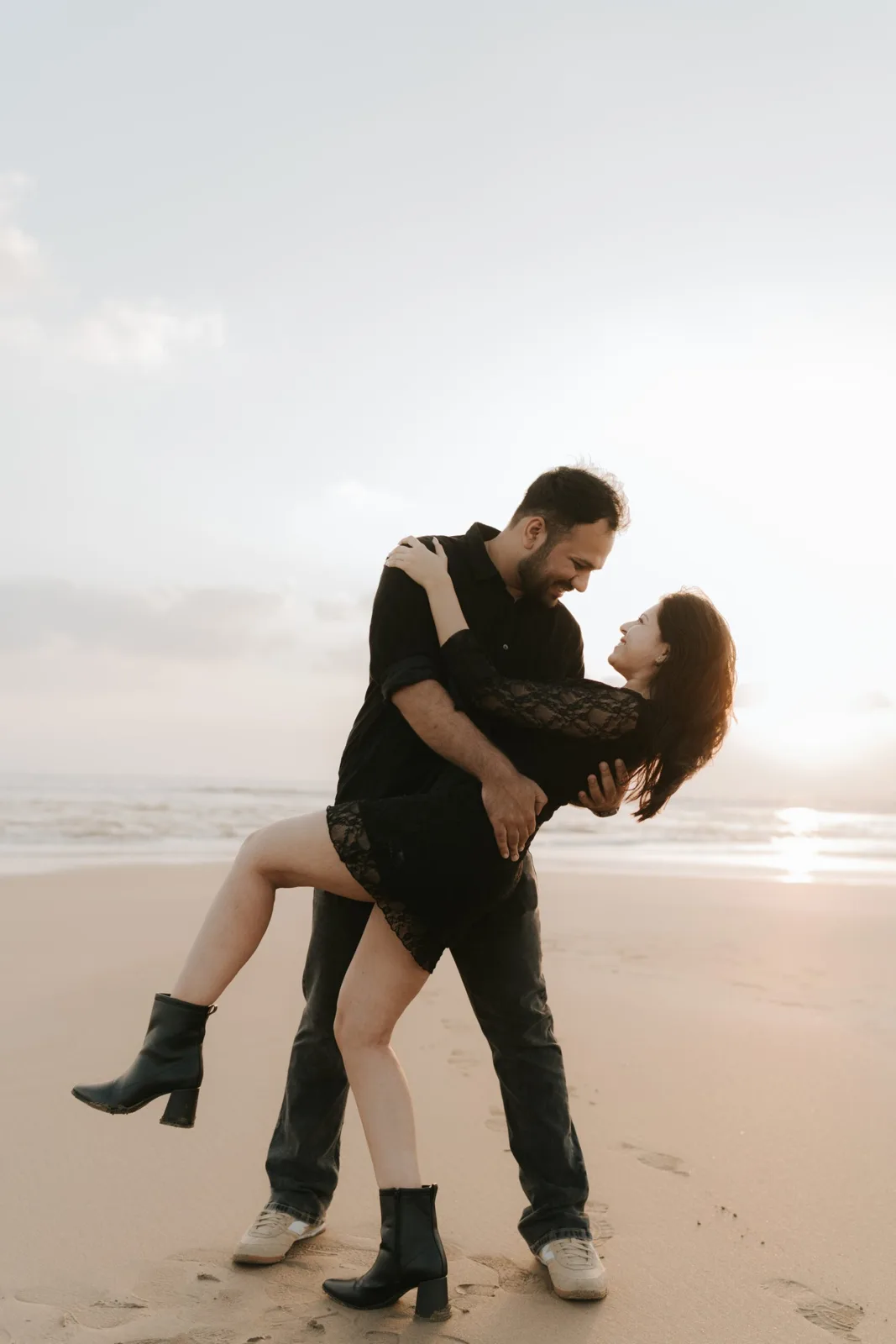
It is common for one partner to be excited about a couple session while the other would rather avoid a camera altogether. A good plan should make room for both feelings. The answer isn't to tell the quieter person to relax and hope for the best. Before a Diu couple photoshoot, talk about what feels uncomfortable, what kinds of pictures you actually want and how much direction would help. Those practical details give the photographer something useful to work with and reduce the pressure to perform.
Describe the discomfort without making it a personality label
Someone may dislike public attention, close portraits, being told to smile or not knowing what to do with their hands. These are different concerns. Share the specific difficulty instead of calling your partner 'bad at photographs'. Ask whether there are existing pictures they feel comfortable with and why. That can reveal a useful starting point for the session. Agree that either person can mention discomfort during photography without it becoming an argument about effort. Your photographer can adapt a pose or move to a quieter spot more easily when the boundary is clear and expressed before frustration builds.
Pick a setting where you can pay attention to each other
A popular public backdrop may bring people watching, walking through the frame or waiting nearby. If attention is the problem, a quieter permitted setting may suit you better than a famous view. Discuss options in Diu around the time you will be available. A hotel area is only an option when the property has agreed to photography. Don't promise yourself an empty public beach. Instead, ask how the photographer handles interruptions and what nearby alternative is practical. The right setting gives you enough space to hear instructions and interact without feeling that the whole session has become a public performance.
Begin with actions rather than facial instructions
A short walk, sitting beside one another or talking about an ordinary memory can be easier than immediately looking into the camera. These actions give your hands and attention somewhere to go. They are a way to begin, not a trick to force a particular reaction. Ask for clear direction if uncertainty is the problem; some people feel calmer when they know exactly where to stand. Let the photographer know if repeated requests to smile make you tense. Once you are comfortable, a few direct portraits can follow without making the whole session depend on maintaining a fixed expression.
Agree on affection and personal boundaries
Couple pictures do not need to involve gestures that either person dislikes. Talk about holding hands, standing close or other expressions of affection before the session. Public comfort can be different from private comfort. Tell the photographer what feels natural and whether any photographs are for personal use only. Don't pressure a partner into a gesture because you saved a reference that includes it. A useful image should represent the relationship in a way both people can accept. This matters again when sharing the finished collection: ask before posting a photograph that one partner considered private during the booking conversation.
Make the session length part of the decision
A longer booking is not automatically more comfortable. Some couples prefer a compact session with a clear set of priorities; others want time to settle before making closer portraits. Explain your preference when requesting the quote. Choose clothing that needs little ongoing adjustment and keep location changes manageable. If someone needs a pause, use it without treating the session as a race. After delivery, choose photographs together. The person who felt nervous may prefer a frame that isn't the most dramatic but feels honest. That is a useful measure of success when the aim was a set of images you both want to keep.
A sample plan you can adapt
For example, one partner might enjoy being photographed while the other dislikes looking directly into a lens in public. The brief can begin with walking together in a suitable quieter area, then use a seated conversation before attempting a short camera-facing portrait. Explain this preference to the photographer rather than hoping they will infer it. If the second partner remains uncomfortable, choose another way to make the essential image; don't turn the session into a test of confidence. This is an illustrative approach, not a guarantee about how somebody will feel. The couple can agree a simple phrase that means 'pause' so neither person needs a lengthy explanation while posing. When reviewing the photographs, let both partners choose favourites privately before comparing lists. An image selected by both may be a better keepsake than a dramatic frame that one person doesn't recognise or feel comfortable sharing.
Discuss your session with Fine Art Photography
Planning couple photographs in Diu when one of you feels camera shy starts with your own priorities, rather than somebody else's photograph list. Share the points in the brief below with Fine Art Photography, together with your preferred date and the people or items involved. Our couple photography service in Diu is the place to discuss suitable coverage, availability and delivery. If your plans also include portrait photography, review our portrait photography service and explain how the two needs fit together. Confirm the agreed scope before booking, including the essential images, practical limits and intended uses. That conversation gives everyone a clearer starting point for the session.
Your photography brief
Use these points as a starting list. Add the details that matter in your situation, and ask which decisions need to be settled before the appointment.
- What each partner finds uncomfortable
- Preferred level of posing direction
- A practical quieter setting
- Affection and public-sharing boundaries
- The few photographs you both want to keep
Common questions
Do we need to practise poses beforehand?
You can try comfortable standing or sitting positions, but you don't need to memorise poses. Explaining your preferences gives the photographer a better starting point.
Can we avoid looking directly into the camera?
Yes, mention that preference. You can still discuss whether one or two straightforward portraits would be useful for an invitation or family print.