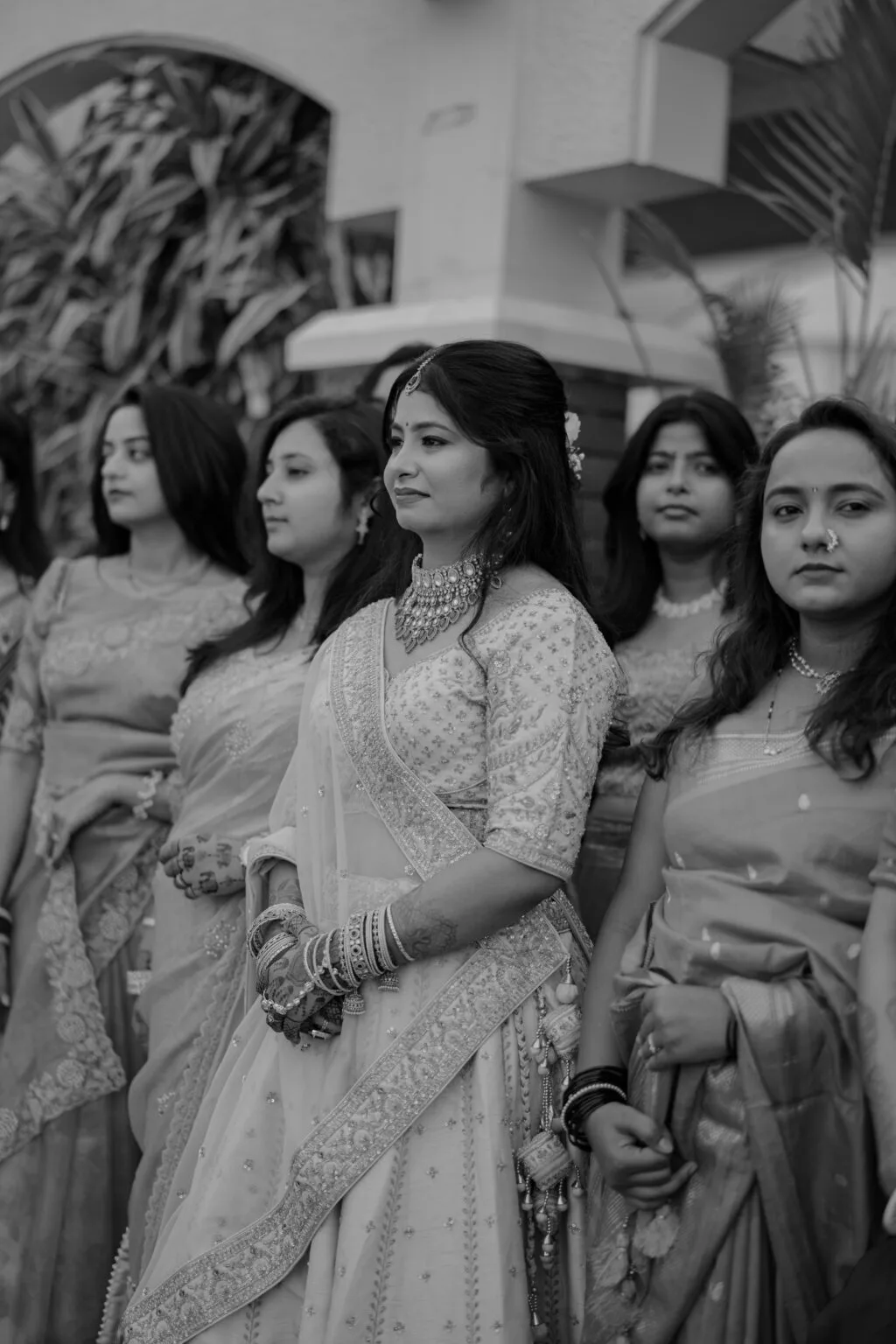
Background blur can help attention stay on a person, but it is not the purpose of every portrait. Sometimes the setting explains the story. Choose how much context should remain visible and ask the photographer to balance that with clear faces and useful framing.
Decide whether the setting matters
Explain why you chose the background. If it tells a personal story, leave enough detail to communicate that connection. If it is simply a workable shooting space, stronger separation may suit the portrait. The choice should follow meaning rather than a fashion for blurred backgrounds.
Ask for readable faces first
The main expression should remain clear in the intended photograph. Groups and people at different distances require particular attention. A blurred backdrop is not a success if an important person falls outside the useful focus area in the same image.
Consider distance and framing
Camera position, subject distance and lens choices affect the result as well as aperture. Discuss the look using examples instead of prescribing one setting. The photographer should test the actual arrangement and keep enough room for comfortable movement and appropriate perspective.
Keep movement in mind
A person walking or turning may change their distance from the camera. The setup needs to account for that action. A still portrait and a movement sequence may need different choices even when the preferred background treatment is similar.
Choose cleaner backgrounds too
Blur does not make every bright object or distracting shape disappear. Inspect the background before shooting and change the angle when helpful. A calmer setting can make a portrait clearer without requiring the strongest possible blur or a heavily altered final image.
Make a contextual alternative
Include a wider photograph or another frame with more environmental detail when the setting matters. This offers variety in the collection. Discuss how the images will be used so the photographer can create both an intimate portrait and a useful scene-setting view.
Review the actual viewing size
A photograph can feel different as a phone image and a larger print. Check whether faces, background and intended detail remain appropriate. Select the image whose focus and framing support its use rather than automatically choosing the most blurred backdrop.
A worked planning example
ILLUSTRATIVE EXAMPLE · NOT A CLIENT CASE STUDY
A portrait in a meaningful family room uses so much blur that nothing identifies the setting. Make a second version with more readable surroundings. The collection can include an intimate expression and an environmental portrait instead of forcing one image to serve both purposes.
Focus decisions become especially important when several people are part of the image. Explain whose face or gesture carries the story, but do not let a decorative background treatment make another important person unintentionally unclear. A photograph can be visually selective without disregarding the relationships in the brief. Ask the photographer for a test when the arrangement changes and compare a contextual alternative. The useful result is not measured by the strongest possible blur. It is measured by whether the person, interaction and setting remain represented in the way the photograph needs to communicate.
If you want a simpler plan
For a simpler focus brief, state whether the setting contributes to the story and which people must remain clear. Ask for one contextual frame and a closer alternative where useful. Let the photographer assess the actual distances and movement. Review the result at a relevant display size before choosing. The collection does not need every background blurred equally; it needs focus choices that support expression, relationships and the role of each photograph rather than a single visual effect applied throughout.
Try this before the session
Describe what the setting means to the portrait and choose one frame where that context remains readable. Add a closer alternative with more separation if it suits the brief. Check the clarity of all important faces, particularly when people stand at different distances or move during the sequence. Discuss the result using the photographs rather than prescribing a camera setting. When selecting, keep the image whose focus and context fit its purpose. The most blurred background is only useful when it helps tell the particular story the photograph is meant to carry.
Make the brief fit the person and the final use
Explain where the photographs will appear and how the person wants to be represented. A private keepsake, a public portrait and a creative sequence can call for different choices even when the setup is similar. Confirm who approves image selection and any specific editing requests. Keep feedback attached to file identifiers so a practical change cannot be confused with another photograph. If someone feels uncomfortable with an action or the way their appearance is discussed, adjust the session respectfully. Record a straightforward alternative when the brief includes an experiment, allowing the collection to remain useful beyond that effect. During review, choose images for expression, clarity and purpose rather than assuming the most dramatic frame must become the main portrait.
Your practical checklist
- Setting's meaning
- Clear faces
- Group spacing
- Planned movement
- Clean background
- Contextual frame
- Viewing size
Questions worth asking
Is more blur always more professional?
No. It is one visual choice. The useful amount depends on the subject, setting and purpose of the image.
Should we specify camera settings in the brief?
Describe the look and show relevant examples. Let the photographer choose settings for the actual people, distances and conditions.
Further reading: Adobe’s guide to shallow depth of field.
Put the guide into practice
Fine Art Photography is based opposite SBI Bank in Diu. Use the portrait photography service page to discuss the assignment itself, including availability, scope and delivery. Share the essential idea, intended use and practical access when you enquire. Travel assignments are confirmed individually. This guide is preparation advice; dates, coverage, editing requests and final deliverables should be agreed directly for your session.
Discuss your photography brief