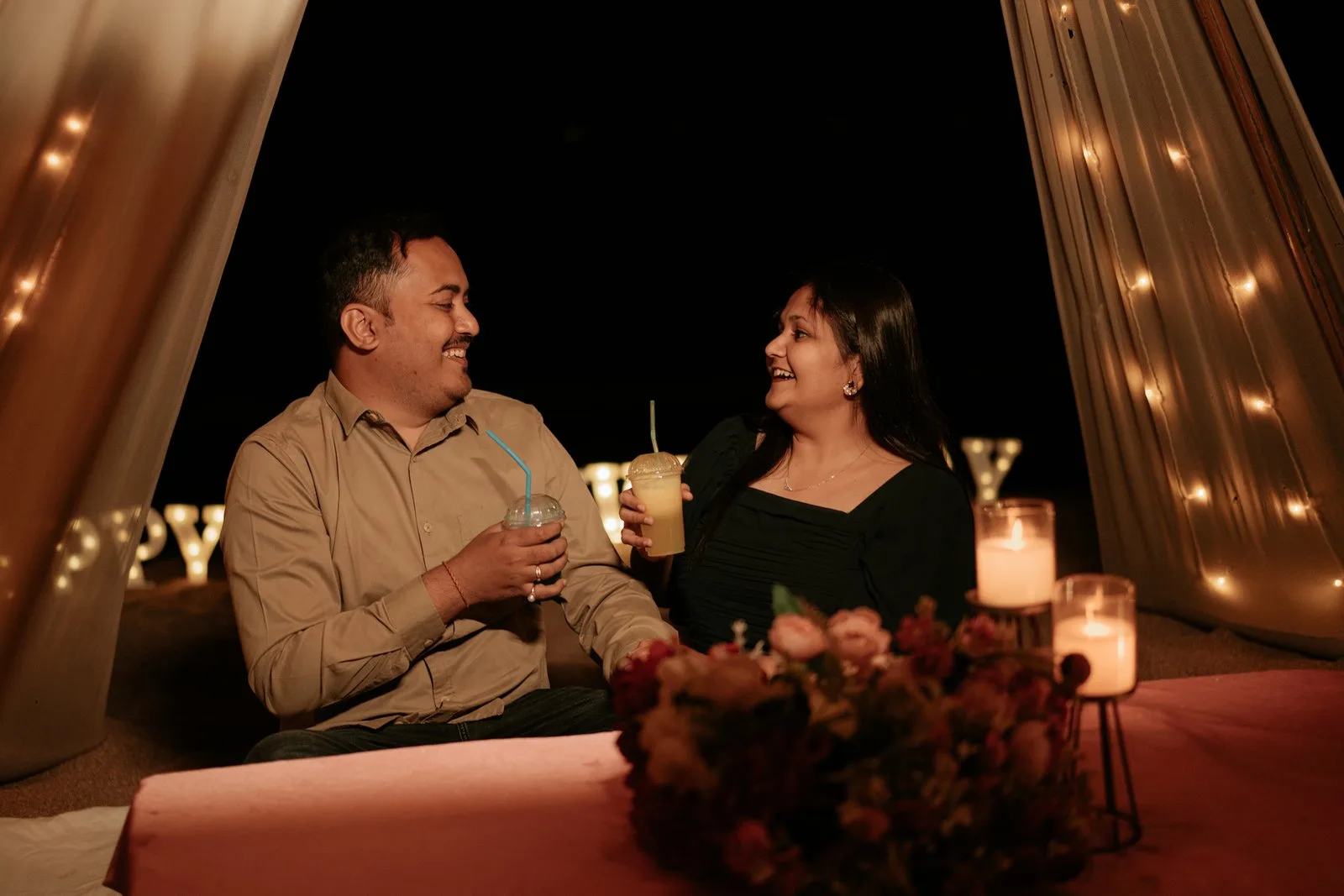
A home session can include familiar routines and meaningful surroundings. It also needs boundaries around privacy and working space. Choose a few areas and actions you are comfortable sharing instead of assuming the entire home must become part of the photograph.
Choose the rooms with a purpose
Select a reading corner, seating area or another space connected to an activity you enjoy. You do not need to photograph every room. A few useful areas with comfortable light and enough working space can provide a coherent session without reorganising the household.
Check personal information
Look for documents, screens, addresses and private photographs in the background. Move or cover them as needed before capture. Privacy is easier to manage onsite than by trying to inspect dozens of delivered images for small details that should not have appeared.
Keep an ordinary activity
Reading, making tea or sitting together can give the couple a clear action. Simplify the task if it takes too long or blocks expressions. The aim is a recognisable routine, not a performance of domestic perfection for the camera.
Use one calm portrait corner
Clear a workable area and check how the light reaches it. Keep furniture changes modest and respect the home. This position can provide a straightforward couple portrait alongside activity photographs, so the entire gallery does not depend on a single action.
Make room for the team
Explain entrances, stairs and where equipment can stay. Ask which household members or pets will be present. A practical arrival plan reduces disruption and helps the couple focus on the session instead of continuously directing bags and people around the home.
Set sharing boundaries beforehand
Discuss which images remain private and whether any can appear publicly. Do not assume permission to share follows automatically from permission to photograph. Keep the agreed boundaries accessible and identify any room or object that should not appear at all.
Keep the collection balanced
Mix the environment, activity and closer expressions. Too many wide room views can make the session feel like property photography. Choose images where the home contributes context while the couple remains the main subject.
A worked planning example
ILLUSTRATIVE EXAMPLE · NOT A CLIENT CASE STUDY
A couple likes their reading corner but does not want family photographs or documents visible behind them. Move those objects temporarily and check the frame before the session. The familiar atmosphere remains without exposing details they intended to keep private.
The household may contain people who are not taking part in the shoot. Explain the plan and avoid treating their presence as automatic permission to photograph them. Choose a working window that fits normal routines and keep shared routes clear. If pets are included, use familiar, comfortable actions without forcing participation. Discuss which images can be shared and what backgrounds should remain private. The session can show a personal environment selectively, preserving familiar atmosphere without making the home look like a staged display or exposing more information than the couple intended.
If you want a simpler plan
A simpler home session can use one familiar activity and one portrait corner. Check private information, choose an unobstructed route and confirm where equipment stays. Explain which images may be shared and keep other household members' preferences in view. The home need not be presented in full. A selective collection can retain its personal atmosphere through meaningful surroundings and real interaction, while avoiding the pressure to restyle every room or expose belongings that were never intended to become part of the public image.
Try this before the session
Walk through the chosen home areas as if the photographs will be seen by someone who has never visited. Note private information, reflective surfaces and objects you would not want shared. Choose one familiar activity and a calmer portrait corner. Confirm how the team enters and where equipment can stay without disrupting the household. Put sharing preferences in the brief. The session can then feel personal while remaining selective about what the home reveals; familiarity does not require showing every room or turning private belongings into public background detail.
Keep the session comfortable for both people
Discuss the concept together before sending the final brief. One person may enjoy a more directed style while the other prefers quiet interaction, so name those preferences and choose a workable starting sequence. Agree who manages bags or outfit help if a companion is coming, leaving the photographer room to give clear directions. Check that the setting and actions support both people rather than only the mood board. A short pause or simpler gesture is a useful adjustment when something feels uncomfortable. Treat optional experiments as additions after the main photographs are covered. The final collection should give you images you recognise and want to use, even if the session produces a different version of the idea than the references first suggested.
Your practical checklist
- Selected rooms
- Private details
- Familiar activity
- Portrait corner
- Equipment space
- Sharing preferences
- People-focused edit
Questions worth asking
Does our home need to be perfectly styled?
No. Choose a few workable areas and remove distractions that affect the frame. Familiar details can belong in a personal session.
Can we keep the photographs private?
Discuss sharing preferences explicitly before the session and confirm the arrangements with the photographer.
Put the guide into practice
Fine Art Photography is based opposite SBI Bank in Diu. Use the couple photography service page to discuss the assignment itself, including availability, scope and delivery. Share the essential idea, intended use and practical access when you enquire. Travel assignments are confirmed individually. This guide is preparation advice; dates, coverage, editing requests and final deliverables should be agreed directly for your session.
Discuss your photography brief