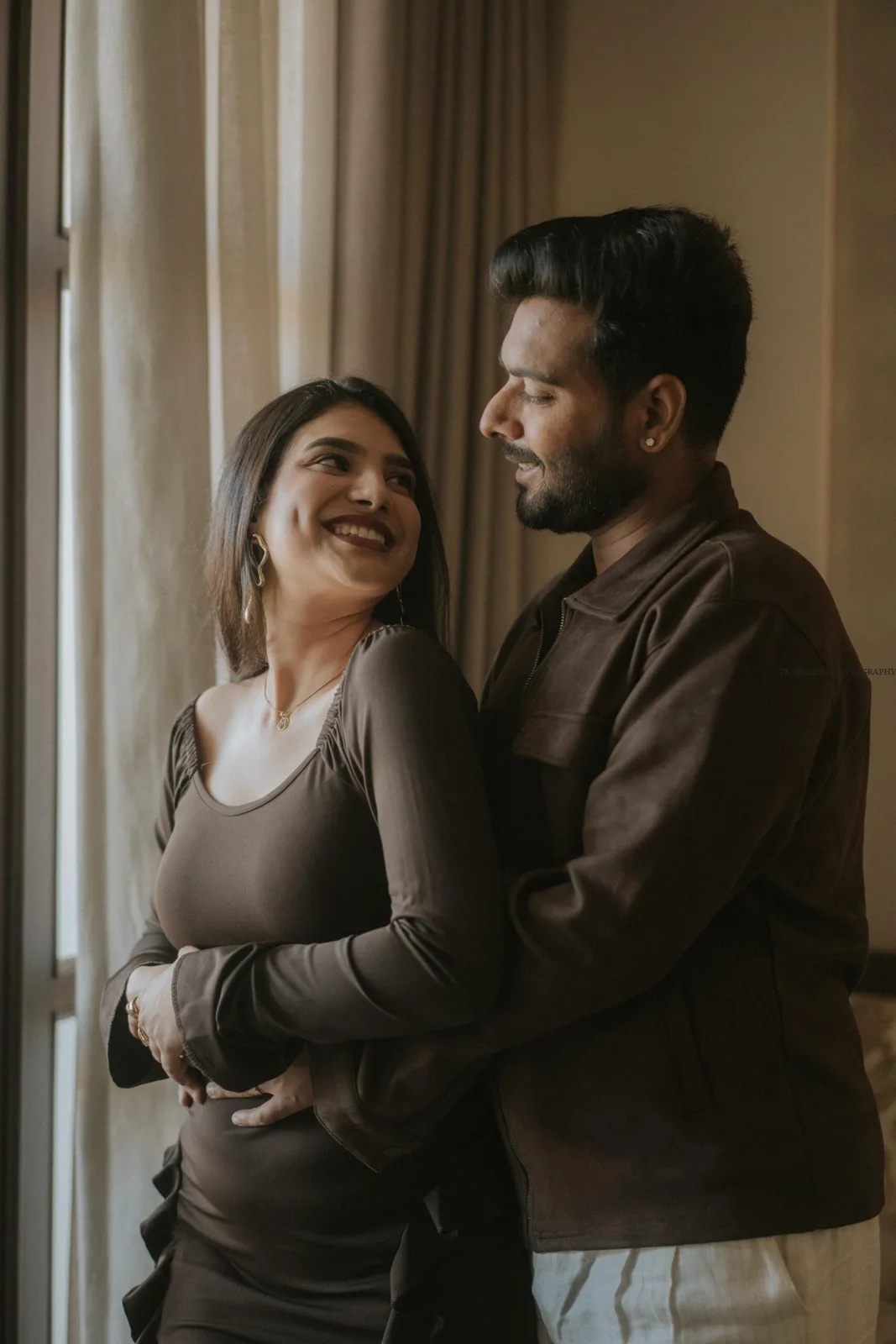
A saved folder of beautiful couple photographs is a starting point, but it isn't yet a photography brief. Some images appeal because of the clothes, others because of the light or the way two people interact. Your photographer needs to know the difference. For a pre-wedding session in Diu, a small, explained moodboard helps you make better choices than a huge collection of unrelated pictures. It also leaves space for your own relationship, rather than asking you to spend the session impersonating people from a reference folder.
Find the reason behind each saved photograph
Choose a handful of images and write one sentence beside each explaining what you like. 'The relaxed distance between them' is more helpful than 'make this exact photo'. Separate atmosphere from location, clothing and editing. A reference made inside a large building may still be useful for its calm expressions, even if your session will be outdoors. Explain which details you do not want as well. This prevents a photographer from interpreting your favourite frame as approval for every part of it. Ask your partner to choose a few references independently; the overlap often reveals a direction that feels comfortable to both of you.
Give the collection one clear job
Decide whether the photographs will mainly live in an album, appear on a wedding invitation or be shared online. An invitation may need space around the couple for names and dates. An album needs a sequence with variety. A phone story may need vertical compositions. These uses don't have to compete, but the photographer should know the priorities before choosing frames. List the photographs that serve an immediate practical purpose and the ones you want for yourselves. This is particularly helpful when a Diu trip gives you only one session window. It keeps the plan focused on outcomes rather than on trying every pose you saved.
Translate the references into a workable setting
Describe the qualities you want: open space, a quiet corner, a simple wall or a coastal view. Then discuss an actual setting with the photographer. Don't assume a photographed location is freely accessible or available at your preferred time. If a Diu hotel or other managed property is part of the plan, arrange permission before treating it as a confirmed stop. A moodboard should help assess locations, not make a promise about them. If your references depend on a particular kind of light, ask when that is realistic and how the plan changes if conditions differ on the day.
Agree on a level of direction you can enjoy
Some couples like clear instructions about where to stand and look. Others become uncomfortable when every gesture is specified. Explain how you feel about being photographed and whether affection in public is comfortable for you. A reference may show a dramatic pose that looks attractive but feels awkward to recreate. It is useful to say so. Choose a few simple actions you can do naturally, such as walking together or sitting close enough to talk. Allow the photographer to adapt those actions to the setting. The session becomes more personal when references guide the mood while your actual interaction supplies the expression.
Keep the brief short enough to use
Send a single page or clearly labelled message with your chosen references, preferred outfit, intended uses and any boundaries. Note what is essential and what is optional. A moodboard that requires a long explanation at every stop is hard to follow during a session. Revisit it once after discussing the location and remove ideas that no longer fit. Include the current version with your booking details so nobody works from an earlier plan. After delivery, choose images for the way they belong together and represent you. A successful brief should lead to a collection you recognise as yours, even when it doesn't duplicate the reference pictures.
A sample plan you can adapt
A sample moodboard could contain one wide couple photograph, one close interaction and an invitation layout. Beside the first, write that you like the open space; beside the second, note the relaxed expression; beside the layout, mark where your names will sit. Those explanations give the photographer three practical goals without asking for three identical recreations. If the chosen Diu setting cannot provide the background in the first reference, the photographer can still look for an open composition elsewhere. If one partner dislikes the pose in the second, choose another action that produces the same gentle mood. The invitation requirement remains a separate framing task. Use this way of reading references with your own images, not as a compulsory set. A moodboard should make decisions easier. Remove a reference when neither partner can explain what it contributes or when it relies on access, clothing or behaviour you haven't agreed to.
Discuss your session with Fine Art Photography
Planning turning a pre-wedding moodboard into a useful Diu photo brief starts with your own priorities, rather than somebody else's photograph list. Share the points in the brief below with Fine Art Photography, together with your preferred date and the people or items involved. Our pre-wedding photography service in Diu is the place to discuss suitable coverage, availability and delivery. If your plans also include couple photography, review our couple photography service and explain how the two needs fit together. Confirm the agreed scope before booking, including the essential images, practical limits and intended uses. That conversation gives everyone a clearer starting point for the session.
Your photography brief
Use these points as a starting list. Add the details that matter in your situation, and ask which decisions need to be settled before the appointment.
- Five or fewer explained visual references
- What the pictures will be used for
- Location qualities and confirmed access
- Comfort level with posing and public affection
- Essential frames, optional ideas and sharing preferences
Common questions
Can we copy a reference photograph exactly?
Use it to explain a preference, then allow for different people, locations and light. Your photographer can discuss a similar mood or composition without promising an identical result.
Should both partners approve the moodboard?
Yes. Each person should be comfortable with the clothing, interaction and public use of the images. A brief agreed by both partners is easier to follow.