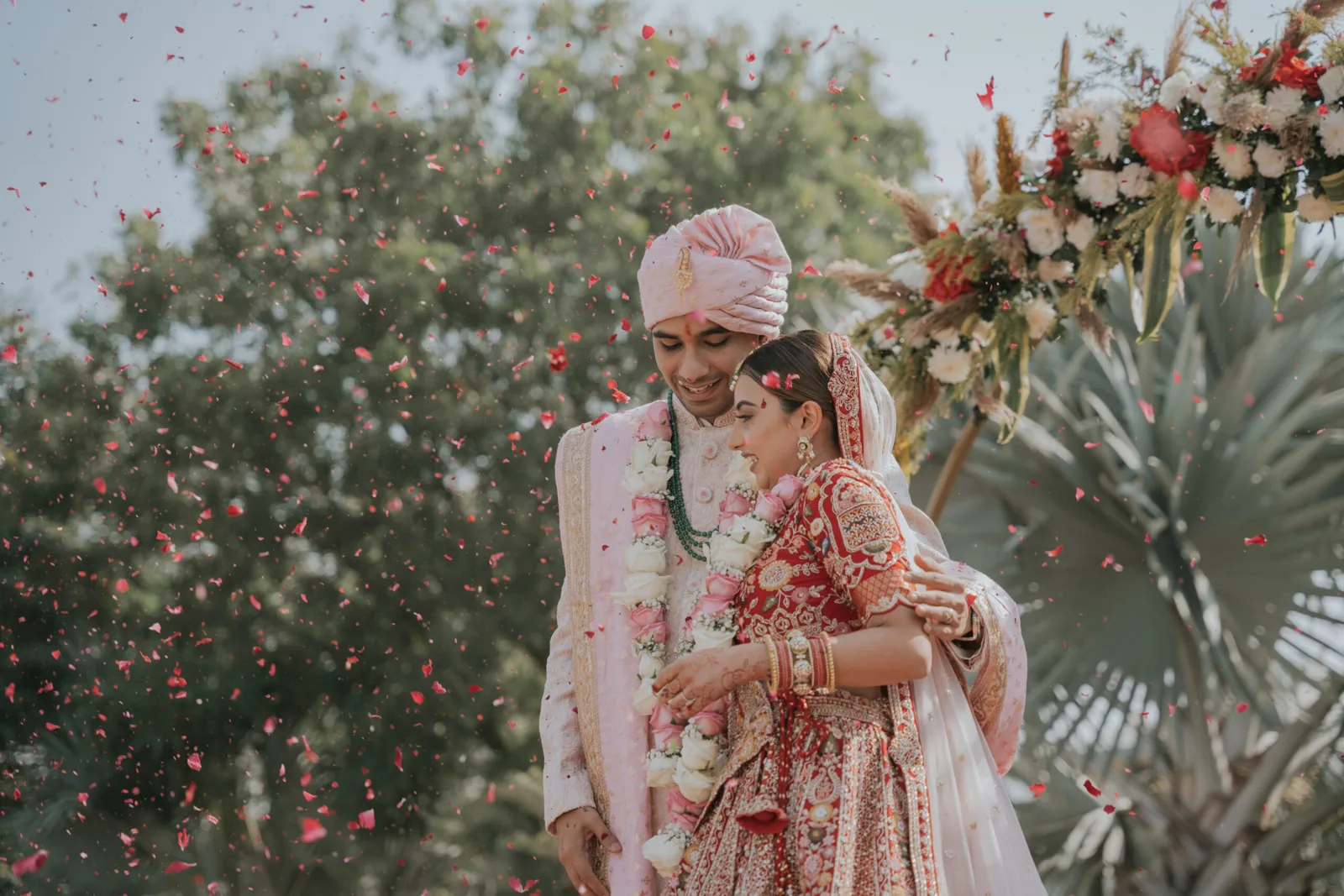
A wedding timetable can look generous on paper and still leave no room for photographs. The missing minutes usually belong to things nobody wrote down: walking from a room to the ceremony, finding a relative, adjusting a dupatta or waiting for a vehicle. For a wedding in Diu, build the photography plan around those transitions as carefully as the main events. You don't need a minute-by-minute script for the whole day. You need a few protected windows and a clear agreement about what happens when the schedule moves.
Start with events that cannot move
Put the ceremony, venue access, meal service and any departure time on the page first. These are the anchors. Ask the family which rituals have a fixed order and which can vary, then share that information with the photographer. Avoid assigning portraits to a gap that another supplier already needs. If the couple must be ready for a ritual at six, the photography window ends before six, with time to return and settle. For celebrations split between a hotel and another venue in Diu, show both addresses in the brief. A drive belongs in the schedule even when the locations look close on a map.
Count ready-to-photograph time, not makeup time
A makeup appointment ending does not automatically mean the bride is available for portraits. Jewellery, clothing, family visits and final adjustments may follow. Agree on what 'ready' means for the photography plan: dressed, comfortable and able to leave the preparation space briefly. If that point comes later than expected, decide which images remain essential. A portrait in good light beside the room may be more sensible than a journey to an outdoor backdrop. The same thinking applies to the groom. Include his preparations and any family photographs he wants, rather than leaving his portraits to whatever time happens to remain.
Give family groups a place in the running order
List the most important group combinations and put them near a point when those people are already together. Large groups take longer to assemble than to photograph. Nominate someone who knows the relatives and can gather the next group while the current one is being photographed. Keep the couple's portrait window separate from this task. If every group is called during that window, it disappears. Explain mobility needs and whether a seated arrangement is preferable. A room close to the ceremony can be a better choice than a scenic corner that requires several people to walk across the property.
Have a decision ready for a late ceremony
A delay does not mean the photographer can move daylight to a later hour. Decide in advance whether couple portraits can happen before the ceremony, during a short earlier gap, or in a suitable indoor setting afterwards. This is a choice about the collection you want, not a requirement to interrupt an important family moment. If you value outdoor portraits, identify a realistic opportunity while there is usable light. If staying with the ceremony matters more, brief the photographer accordingly. A timeline becomes useful when it includes these priorities, because somebody can make a reasonable decision without asking the couple to solve every change.
Share one version with everyone who needs it
Keep the photography schedule short enough to read on a phone. Include the location, contact person, essential groups and the person authorised to approve changes. Share the same version with your photographer and the coordinator handling the day. Mark any update clearly so an old message is not mistaken for the current plan. Don't fill every spare minute with another photograph. A modest buffer can absorb the ordinary delays that happen around a wedding. After the event, the images should describe the celebration and the people in it; the schedule should support that experience rather than become another performance to manage.
A sample plan you can adapt
Consider a sample schedule where the couple finish dressing shortly before guests gather for the ceremony. There is a short portrait opportunity, but a separate hotel-to-venue journey is also required. Write the journey into the schedule first. Then choose whether that remaining window serves a portrait near the preparation room or a family combination with somebody who cannot stay later. Trying to fit both plus an outdoor stop is likely to create pressure. If the ceremony runs late, the coordinator already knows which portraits may move indoors and which can be shortened. This example isn't a prescribed timetable; it shows how a priority becomes a usable decision. Ask your photographer to review your actual locations and ritual order, then mark the point at which the plan changes. Keep a second optional list only if the essential collection remains protected. Nobody should need to debate the value of every frame while the couple are being called to the next event.
Discuss your session with Fine Art Photography
Planning a Diu wedding photography timeline that leaves room for portraits starts with your own priorities, rather than somebody else's photograph list. Share the points in the brief below with Fine Art Photography, together with your preferred date and the people or items involved. Our wedding photography service in Diu is the place to discuss suitable coverage, availability and delivery. If your plans also include bridal photography, review our bridal photography service and explain how the two needs fit together. Confirm the agreed scope before booking, including the essential images, practical limits and intended uses. That conversation gives everyone a clearer starting point for the session.
Your photography brief
Use these points as a starting list. Add the details that matter in your situation, and ask which decisions need to be settled before the appointment.
- Ceremony order and fixed start times
- Both venue addresses and access arrangements
- When each partner expects to be fully ready
- Essential family combinations and a group coordinator
- Preferred portrait window and a backup option
Common questions
How much time should we allow for couple portraits?
Ask for a recommendation based on your venue, clothing, planned images and walking distance. A short session near the venue and a multi-location session need different amounts of time; there is no universal slot that suits every wedding.
Can the photography plan change on the day?
Yes, but establish priorities beforehand. Explain whether you would rather shorten posed portraits, move them indoors or leave them for a separate session if the celebration runs late.